Suspense (1913)
released 6th July 1913
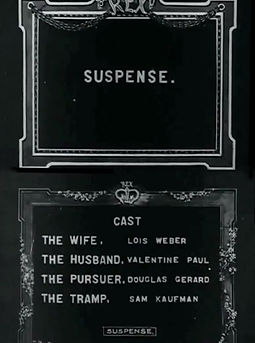
Cast:
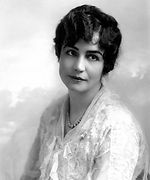
Lois Weber
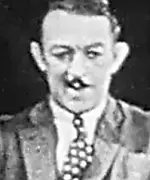
Val Paul
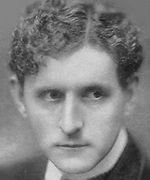
Douglas Gerrard
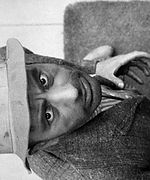
Sam Kaufman
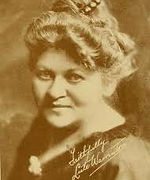
Lule Warrenton

Suspense (1913)
Drama, Short
10m
Rex Motion Picture Company
Director:
Writer:
Lois Weber
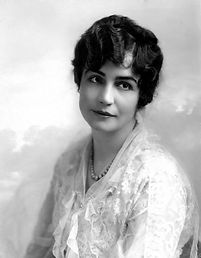
History has not been kind to Lois Weber. A versatile filmmaker, and unfairly labelled as a propagandist because of her prescient social conscience, her contribution to cinema was long overlooked. For a brief period, she sat at the pinnacle of the filmmaking community as Hollywood’s highest-paid director. Her decline was swift, coinciding with the collapse in the mid-1920s of her marriage to Phillips Smalley. The couple collaborated on over 100 films, although some suggest Smalley provided more emotional support than creative input. Today, only a handful of the over 150 movies she made are available to view. Those that are all show Weber’s enormous skill as a filmmaker.
Suspense illustrates Weber’s incomparable grasp of cinematic language and technique. In ten minutes, she packs her simple tale with innovative camera angles and triptych split-screens, building tension while enhancing its compelling narrative. Weber also stars as the mother of a small baby alone in a remote house. Minutes after the woman’s housekeeper deserts her post, an opportunistic tramp arrives. The frantic mother locks herself in a bedroom while the tramp (Sam Kaufman) ransacks the kitchen for food. Armed with a knife, he believes time is on his side after cutting the telephone wire. But luckily, the mother phoned her husband (Val Paul) at work moments before. The husband steals a car, triggering a chase in which he races against time to reach his wife before she is raped and/or murdered while eluding his pursuers.
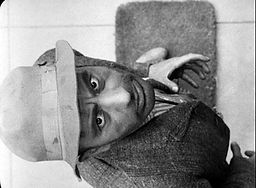
Sam Kaufman in Lois Weber's Suspense (1913)
Suspense was inspired by André de Lorde and Charles Foley’s 1902 stage play Au Téléphone, which also provided the plot for both D. W. D.W. Griffith’s The Lonely Villa (1909) and An Unseen Enemy (1912). Back then, critics considered Weber equal to Griffith, both in terms of talent and influence. Her film, however, is more effective than either of Griffith’s versions; it ramps up the tension to previously unknown heights and adds creative innovations that Griffith’s films lack.
She films the moment the mother spies the tramp lurking outside from directly above, as if from the mother’s viewpoint as she peers out of an upstairs window. Hearing something, he looks straight up into the camera, giving the audience a taste of the wife’s terror. Weber films both his entry and the housemaid’s departure from a high angle, through the beams of a pergola, depicting desertion and intrusion as twin violations of trust. When a car full of policemen pursues the husband, Weber films the shot so that we see them drawing closer in his wing mirror. Such techniques are commonplace today but were strikingly new in 1913. The refreshing use of the camera in this way shows a highly creative mind working near the peak of its powers.
The tragic loss of so much of Lois Weber’s work means she is an enigma today. End of the Circle, the autobiography she wrote when in the depths of despair in the mid-1920s, was never published and was stolen in the 1970s; she left no letters, and those who knew or worked with her are long dead. Her death in 1939 warranted only three paragraphs in Variety, which erroneously noted that she was the first woman film director (Alice Guy Blaché was the first; Weber was Hollywood’s first female director). While it is only right that her immense contribution to early Hollywood filmmaking has been reassessed in recent times, it is a sad indictment of the industry that its neglect and apathy have deprived us of unknown cinematic delights.
Sources: Lois Weber in Early Hollywood, Shelley Stamp; Lois Weber - The Director Who Lost Her Way in History, Anthony Slide.