A Florida Enchantment (1914)
released 10th August 1914
Cast:

Sidney Drew

Edith Storey

Charles Kent

Jane Morrow
Ada Gifford
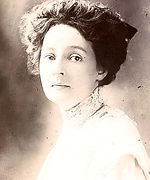
Ethel Lloyd
A Florida Enchantment (1914)
Comedy
63m
Vitagraph
Director:
Writer:
Eugene Mullen

"A Fantasy of the Everglades... A Delightful Midsummer Entertainment"
Stage actor Sidney Drew was an adopted member of the famous theatrical Barrymore family. He was an uncle to Ethel, John and Lionel, who knew him as Uncle Googan (after one of his comic stage characters). In his autobiography, We Barrymores, Lionel Barrymore suggested Drew was Louisa Lane Drew’s birth son, born out of wedlock, although this has never been verified. According to Lionel, he was also something of a pool shark. He recalled Drew would “march us sedately down Chestnut Street, a model of avuncular correctness, turn sharp right, and repair some blocks away to a pool hall.” Drew is one of cinema’s forgotten figures. The vast majority of the near-200 shorts he made are lost, but his domestic comedies, churned out at the rate of one per week, were hugely popular in the 1910s. Their gentle scenarios found favour with audiences seeking respite from the frantic slapstick of Mack Sennett’s hyperactive clowns. However, they were less popular with critics. In The 7 Lively Arts, Gilbert Seldes remarked that “in them there was nothing offensive, except an enervating dullness… And apart from the agreeable manners of Mr. and Mrs. Sidney Drew, nothing made them successful except the corrupt desire, on the part of the spectators, to be refined.”
Drew usually stuck to short pictures, but in April 1914 he travelled to St. Augustine, Florida to make the five-reel feature The Florida Enchantment for Vitagraph, with whom he had signed in 1913. In his autobiography, Two Reels and a Crank, Albert E. Smith, one of Vitagraph’s founders, recalled Drew as a tippler who was never seen drunk. Smith wrote, “Like the similarly seasoned W.C. Fields, Drew handled his drinking with a calm evenness of spirit. Also like Fields and Pop Rock, he despised drunks.” That wouldn’t stop Drew from substituting real whiskey for the cold tea that usually passed for the tipple on the screen. Smith remembered how Drew “stopped at a saloon adjoining a railway station for a postbreakfast bracer of eight Manhattans. When Drew entered, the drinks were lined up on the bar awaiting him. The daily routine was all the more fascinating because it had no visible effect, probably accounting for a notably easy style before the camera.”
A Florida Enchantment also features Drew’s wife, Lucille McVey. The couple married shortly before the film’s release – just six months after the death of his first wife, with whom he had enjoyed a twenty-year film and stage career. Edith Storey, another forgotten star of the silent era who retired from films in 1921, played the female lead.
Vitagraph promoted the film - one of their “Broadway Star Features” - as a ‘farcical fantasy’. It was based on a controversial novel by the prolific self-published writer Archibald Clavering Gunter. Drew plays Doctor Fred Cassadene, whose fiancée, Lillian Travers (Storey), grows impatient with the frequent absences arising from his position as the resident doctor at an upmarket Florida hotel. Lillian comes across some seeds that turn men into women and vice versa. In a fit of pique, she swallows one and almost immediately experiences a change in mannerisms and attitude. The following morning, she awakens to discover she has grown facial hair. Deciding she now needs a valet, she entices her maid into taking a pill also and adopts a new identity as a man. However, she is soon suspected of being Lillian Travers’ murderer.


Ethel Lloyd and Edith Storey in Sidney Drew's A Florida Enchantment (1914)
A Florida Enchantment is largely remembered today for its early depiction of cross-dressing and bisexuality. Drew was not a progressive filmmaker, so it’s doubtful that the film is an early endorsement of such lifestyles, particularly as Drew, who also directed, had white actors in blackface portray black characters. Drew plays his male cross-gendered character as a stereotypical sissy, suggesting he simply hit on an idea he believed would attract an audience. He targeted a male audience, presumably, who would find two women locking lips, no matter how chastely, titillating.
Drew’s misjudgment is compounded by the fact that A Florida Enchantment is incredibly dull; its laboured, overwrought attempts at humour rarely raise a laugh. Drew clearly did not know how to make a feature-length comedy, especially out of material that is far better suited to the short format he usually worked with. He is also far too old at fifty-one (and looking a good ten years older, presumably thanks to those Manhattans) to the 22-year-old Storey. Ironically, Lucille McVey, Drew’s new wife, was only twenty-four.
Edith Storey is the film’s one bright note. She appears to be having a whale of a time striding around behind a fake moustache and unnerving men unable to reconcile her slight frame with her bone-crushing handshakes.
The critic for Variety dismissed the film. In a scathing review, he complained, “A ‘Farcical Fantasy’, eh? Yes, it is, and besides that it is the most silly inane “comedy” ever put on the sheet. The thing started off like a comic opera, but it lapsed into a weary, dreary listless collection of foolish things that drove several of the few people at the Vitagraph Tuesday night out of the theatre before the third reel had run through… The picture should never have been put out, for there’s no-one with any sense of humor whatsoever, or intelligence either, who can force a smile while watching this sad “comedy.”” The New York Clipper was also displeased by its “most disagreeable theme,” and questioned “why the Vitagraph Co. did not secure real colored folks for the two or three incidental bits, instead of using Caucasians for the parts. The fact that burnt cork is used is easily discernible, and spoils the effect.”
Drew returned to making shorts following the release of A Florida Enchantment. Usually, he would appear opposite his new wife, who was billed as Gladys Rankin. He also starred in a one-act play at the Vitagraph Theater in December 1914 that was written by his son, Sidney Rankin Drew, whose promise as an actor and director was cut short in May 1918 when he crashed to his death under attack while serving in the French Lafayette Escadrille. The twenty-seven-year-old volunteer had just shot down his first German airplane. The death of his son devastated Drew, who suffered a complete nervous and physical breakdown. He died of uraemic poisoning in 1919.
Sources: We Barrymores, Lionel Barrymore; The 7 Lively Arts, Gilbert Seldes; Two Reels and a Crank, Albert E. Smith; The Barrymores: Hollywood's First Family, Carol Stein Hoffman; Ethel Barrymore, Alex Thorleifson; The Celluloid Closet: Homosexuality in the Movies, Vito Russo.