Damon and Pythias (1914)
released 23rd November 1914
Cast:

William Worthington

Herbert Rawlinson
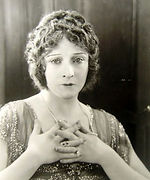
Cleo Madison
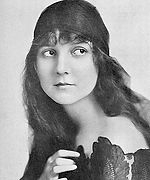
Ann Little

Frank Lloyd

Carmen Phillips
Damon and Pythias (1914)
Drama
100m
Universal
Director:
Writer:
James Dayton, Ruth Ann Baldwin

"Premier Masterpiece in Six Parts"
Early in 1914, Universal boss Carl Laemmle began winding down production on the East Coast and instructed West Coast manager Isidore Bernstein to purchase the Taylor ranch in the San Fernando Valley. The price was $165,000 with a down-payment of $3,500, and it expanded Universal City by 230 acres. The land that would provide the backdrop for hundreds of movies over the following decades had rolling hills dotted with trees, a stream and even some arid scrubland. It was also where Mexico signed the contract ceding California to the United States. The construction of new stages, film labs, administration units and animal pens began in June 1914 under William Horsley’s supervision – although before he could erect buildings, he had to build the roads to reach their locations.
Horsley worked on a schedule that ensured all would be ready for a grand opening in March 1915, but film production began long before then. The first film to emerge from a studio that would produce tens of thousands of them was Otis Turner’s ambitious costume epic Damon and Pythias, which was written by Ruth Ann Baldwin and James Dayton and sought to emulate the epic historical dramas coming out of Italy (Selig had filmed the tale as a short in 1908). Trade magazines of the time reported that after months of intense research into ancient Greek architecture and lifestyles, Turner had constructed ‘a Grecian village of three streets’ and that ‘1500 to 2600 people are to be used in the production.’ They also noted that he ‘carefully mapped and planned the direction of the massive production. Whole cities were built, Grecian gardens were constructed, crude stone chiseled into statuary, the magnificent baths of the ancient Grecians were duplicated and everything done to create proper atmosphere.’ Picture-Play Weekly reported that ‘three types of armor [were] used, and one hundred and fifty of each kind, including helmets, breastplates, stomachers, sword sheaths, leg armor, and shields,’ and Motion Picture News added that, ‘1,500 costumes, all alike, and made in the company’s costume factory, were worn by extra people, each one was required to use the same costume throughout the entire production. When the feature was finished, all costumes were fumigated before they were returned to the wardrobe for storage.’


Otis Turner's Damon and Pythias (1914)
The story of Damon and Pythias is a celebration of friendship that dates to Ancient Greece. When the tyrannical Dionysius sentences Pythias to die, Pythias asks that his execution be delayed long enough for him to put his affairs in order. Dionysius refuses his request, believing he will abscond, so his friend Damon offers to die in Pythias’s place if he doesn’t return at the appointed time.
The characters of Damon and Pythias seem to be interchangeable, depending on the source consulted. This film’s writers appear to have altered certain aspects to make the story more appealing to a 1914 audience, although the key plot points are intact. For all their embellishments, Baldwin and Dayton have done little to give the characters any real depth. It is Dionysus who is the more interesting, thanks in part to future director Frank Lloyd’s performance and to the fact that he is the villain of the piece. As we all know, villains are always more interesting than heroes. William Worthington’s broad performance as Damon betrays his stage origins, while Herbert Rawlinson as Pythias fares little better. But the film excels in its battle sequences and the chariot race in Syracuse rather than in its dramatic moments.
The film’s success was due in part to the support of the Knights of Pythias, a national fraternal brotherhood inspired by the legend of Damon and Pythias, who not only provided some of the film’s many extras but whose top officials also attended the premiere at the New York Theatre on Broadway on 30th November 1914. Several delivered speeches at the premiere expressing their admiration for the way Universal handled the story. The Moving Picture World reported that the film “has made a strong impression with its fascinating and dramatic scenario, its splendid portraying company, its great scenes and perfection in photography.” It also reported that a ‘metropolitan paper’ said, “Damon and Pythias deserves to rank as one of the most magnificent moving picture productions that has ever been presented. It is cleanly acted and devoid of sensationalism.”
Sources: The Universal Story, Clive Hirschorn; Universal Weekly Vol V. No 26; Motion Picture News, 21st November 1914.