The Spoilers (1914)
released 11th April 1914
Cast:
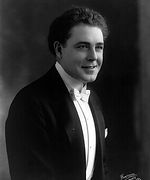
William Farnum

Kathlyn Williams

Tom Santschi

Bessie Eyton
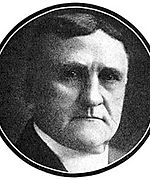
Frank M. Clark
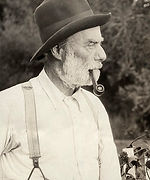
Jack McDonald
The Spoilers (1914)
Drama, Western
110m
Selig Polyscope
Director:
Writer:
Lanier Bartlett

"In the history of picture making no success has been so immediately recognized... as that intensely dramatic and powerfully appealing production." Trade ad, Moving Picture World, 1914
Soon after his older brother Dustin made cinema history by starring in The Squaw Man, Hollywood’s first feature-length movie, William Farnum made his own contribution to film history with his starring role in Selig Polyscope’s The Spoilers. Like his brother, Farnum came from the stage. He starred for five years in the title role of Klaw and Erlanger’s elaborate stage production of Ben-Hur before forging a career in the movies. The Spoilers, his second film, paired him with ‘Selig Girl’ Kathlyn Williams, one of the studio’s biggest stars. 34-year-old Williams had recently scored a box office success with the 13-chapter serial, The Adventures of Kathlyn.
The film was a reasonably faithful adaptation of Rex Beach’s first best-selling novel of the same name. His tale of corrupt government officials stealing gold mines from prospectors reflected his own observations while prospecting for gold in Nome, Alaska. He wanted $2,500 for the rights to the novel, but Colonel William N. Selig, the owner of Selig Polyscope, negotiated a royalty payment while maintaining the story rights. This marked the first time an author received royalties for a picture.
In the film, director Colin Campbell depicts Nome as a hastily constructed makeshift town. Its streets are awash with mud, its timber buildings ramshackle. It provides a home for unwashed desperadoes keen to grab their share of gold discovered in nearby creeks and beaches. They look weary and desperate. Their clothes are functional (apart from those of Bessie Eyton, a steamer stowaway whose costumes are improbably glamorous by comparison). For such an early feature, The Spoilers really does create a remarkably realistic atmosphere. Whether this is because of budget constraints or director Colin Campbell was striving for authenticity is debatable.
Campbell’s primitive direction unintentionally enhances the near-claustrophobic sense of desperation. The Scottish director was highly regarded during the silent era, but while Griffith and other directors were using close-ups and pans, Campbell was still planting his camera in front of his actors and instructing them to act out their scenes within the space captured by his static lens. The Spoilers contains only one close-up and one pan, and the use of medium shots, which sometimes makes it difficult to perceive which character is speaking, means their name has to precede their lines in the intertitles.


Tom Santschi and Bessie Eyton in Colin Campbell's The Spoilers (1914)
Despite this, it’s an entertaining film thanks to a pacey plot full of incident. Farnum plays Roy Glenister, who, with his partner Dextry (Frank Clark), has laid claim to a mine in Nome. However, Alex McNamara (Tom Santschi) has conspired with a corrupt judge (Norval MacGregor) to defraud all the prospectors out of their mines. The judge is too ill to travel, so his niece (Eyton), who is unaware of their purpose, delivers the documents necessary for the successful completion of their scheme for him. However, when Glenister and Dextry learn of McNamara’s plot, they enlist the aid of lawyer Bill Wheaton (actor unknown) to help them foil him.
The Spoilers’ claim to fame is a bruising fistfight between Glenister and McNamara. Perhaps because it was unseen for so long, the scale of this fight became something of a legend. However, what survives today is distinctly ordinary – disappointing, in fact, given its reputation. The actors throw a few wild punches – and one or two appear to connect – but most of the time Farnum and Santschi merely wrestle one another, stumbling around a cramped office.
Farnum claimed he misjudged Santschi’s first swing and received his fist square in the nose, breaking it. He recalled, “I’m ashamed to say that I thought he’d hit me hard on purpose, so I waited for an opening. Then I let him have it. After that we were both punch drunk. The people on the sidelines - those were silent pictures remember - yelled ‘Stop them! They’re killing one another.’ He caught me over the left eye, and I spurted blood like a stuck pig. I leaped at him, and he bent double, but he straightened up. He was a big man, and I landed twelve feet away. Dear old Tom! We got to be great friends afterward. We smashed a bookcase - I found myself inside with Tom on top of me, and then it went over - it should have killed us. I’ve never been quite the same man since that fight. Besides the broken nose. I had two bent ribs and a crushed sinus in my cheek that gave me dizzy spells for years. At the end I got a good shoulder lock on Tom, and I bent him back and back and back until I heard him groan, ‘For God’s sake, Bill!’ Then I had enough sense to let go. When it was over, messy and bloody as we were, Tom and I went to a Turkish bath and stayed for three days.”
The film’s premiere took place on 25th March 1914 at Chicago’s Music Hall before an audience of approximately 2,000 before going on general release on 11th April. It was also the opening night film for S.L. Rothapfel’s Strand Theatre in New York. It was a hit with both the critics and the public, despite lingering fears that audiences wouldn’t sit through a film lasting nine reels (this was nine months before the release of D. W. Griffith’s The Birth of a Nation). In the United States, those fears proved unfounded, although in the UK at least one distributor cut the film to four reels because audiences were unaccustomed to feature-length movies. In 1916, Selig would release an extended version that ran for 12 reels and included footage of the author Rex Beach working in his study.
While most of the principal cast members enjoyed successful careers, Bessie Eyton, who played Helen Chester, was not so fortunate. By the late 1920s her career had declined, and by the 1930s she was working as an extra when she disappeared in 1935 after arguing with her mother. In 1996, film historian Billy Doyle discovered she had died in a charity shelter in 1965 after years of chronic alcoholism.
Sources: Colonel William N. Selig: The Man Who Invented Hollywood, Andrew Erish; The Reel Cowboy: Essays on the Myth in Movies and Literature, Buck Rainey; The Strong, Silent Type: Over 100 Screen cowboys 1903-1930, Buck Rainey.