Hearts in Exile (1915)
released 12th April 1915
Cast:

Clara Kimball Young

Montagu Love
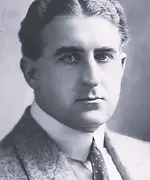
Claude Fleming

Vernon Steele

Fred Truesdell
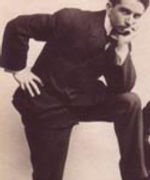
Paul McAllister
Hearts in Exile (1915)
Drama, Romance
59m
Vitagraph
Director:
Writer:
Owen Davis

"A powerful play of Russian life"
1915 was a successful year for 24-year-old Clara Kimball Young. Lured away from Vitagraph by Lewis Selznick in September 1914, after scoring her biggest hit with My Official Wife, she starred in the box office hits Trilby and Carmen. First though, she appeared in Hearts in Exile, a drama based on the novel of the same name by John Oxenham.
Born Edith Matilda Clara Kimball on 6th September 1890 to travelling stage performers, she made her stage debut at the tender age of three. She returned to the stage after a spell in her teens at the St. Francis Xavier Academy in her hometown of Chicago. In 1910 she met and wed the actor and director James Young. Two years later, they both signed with Vitagraph. Clara earned $25.00 per week, but her husband always insisted that he receive more than his wife. Often directed by her husband, Clara became a near-instant hit with film fans.
Her stock rose so swiftly that Selznick lured her away from Vitagraph to the newly formed World Film Company for a salary reputed to be ten times that awarded to her husband. Selznick was much more of a hardheaded businessman than James Stuart Blackton and Albert Smith, the heads of Vitagraph. After growing bored with his jewellery business, he had entered movies by unconventional means. Noting the turmoil at Universal while negotiating the sale of his friend Mark Dintenfass’s stock in the company, he commandeered a vacant office at the Universal headquarters, awarded himself the title of General Manager, and placed himself on the payroll. Locked in a fierce battle for the studio, company directors Carl Laemmle and Pat Powers each assumed the other had employed Selznick!
Selznick moved on from Universal to join with several other investors in the World Film Company, a firm formed to import foreign features. With Albert Spiegel, a mail-order mogul, he formed Equitable Pictures to make Kimball Young’s films. Backed by Wall Street investment firm Ladenburg, Thalman & Co., he negotiated a deal with Broadway producers William A. Brady and the Shubert brothers to adapt their stage shows for the screen. These he marketed under the less than catchy slogan, ‘Features Made from Well-Known Plays by Well Known Players,’ a direct steal of Zukor’s own ‘Famous Plays for Famous Players’ slogan. As well as Equitable Pictures, the World Film Company also released features made by Peerless and other independent companies in 1914 and 1915. Although forgotten now, the World Film Company counted among its staff directors George Archainbaud, Albert Capellani and Maurice Tourneur. Clarence Brown worked as Tourneur’s assistant; Josef von Sternberg worked there as a film cutter, and World Pictures gave writer Frances Marion her first position.
For his voluptuous star with the expressive eyes and brunette hair, Selznick created an image of the wounded, melancholic tragedienne. To uphold the image, he forbade her visiting cafes or bars.
Hearts in Exile, adapted from John Oxenham’s novel by Owen Davis, sees Miss Kimball Young playing Hope Ivanovna, a selfless aid worker dispensing money and bread to Russia’s poor citizens. Her generous deeds win her the admiration and love of two men – Paul Pavloff (Vernon Steele), a poor doctor, and the wealthy Serge Palma (Claude Fleming). She also attracts the covetous attention of Count Nicolai (Montagu Love), chief of the Secret Service. Hope marries Serge only because he can finance her good deeds but loves Paul. Nicolai has both men exiled to Siberia on false charges to leave the way clear for his seduction of Hope. However, she travels to Siberia to be with her husband, not realising that Paul and Serge swapped identities so that Serge can serve the lighter sentence and return to his wife. She stays with Paul, and when they hear Serge has died, live as man and wife. But then Serge appears with a false pardon for Paul…


James Young's Hearts in Exile (1915)
Hearts in Exile is typical of American melodramas of the 1910s based in Russia, which was then still ruled over by a Czar. It benefits from better production values than many, and from James Young’s competent, if uninspired, direction. The scenes set in the snowy wastes of Siberia are especially effective, creating a strong sense of the harsh weather conditions, although the log cabin in which Paul serves his term seems rather luxurious. The plot clips along at a furious pace without feeling rushed, and plenty of twists keep things interesting, although the many acts of noble sacrifice committed by the three leads feel a little too good to be true at times. The plot is also resolved by a means most modern audiences would find a little too convenient, but which audiences in 1915 apparently lapped up.
Saranac Lake in New York served as an able substitute for Siberia, with location filming taking place in freezing conditions in 1915. One highlight of the climactic chase is when a horseman and his mount, pursuing the trio as they escape from Paul’s internment camp, plunge into the icy water beneath a frozen lake. According to reports, the rider and his horse sank so deep into the water that onlookers feared they were lost. He was pulled from the freezing lake more dead than alive and was in a serious condition for several days. The director James Young also fell through the ice during filming, and after freeing himself remarked his clothes were “frozen stiff as a board.”
According to the New York Clipper, Young despatched his assistant Edwin L. Hollywood to the East Side of New York to find “special types needed for the picture” because he wanted people who looked Russian rather than regular extras. Hollywood also visited a Russian-Greek Catholic church on 97th Street, where the priests furnished him with robes, icons and a portrait of the Czar.
Reviews of the film were favourable, singling Kimball Young out for her “sterling” performance. The Moving Picture World praised her “unfailingly expressive acting” before commending the “able supporting company.” That review also noted the snow scenes as visually striking and essential to the dramatic content of the story.
In Sept 1915, the New York Clipper reported that the British government, in the midst of the Great War, had barred the film in the UK because of fears that showing the film might cause offence to “Great Britain’s heroic ally, the Imperial Russian Government.” Lewis Selznick immediately contacted Robert M. Lansing, the US Secretary of State, to protest. Sadly, his efforts were in vain, and the ban has never officially been lifted.
Sources: Showman: the Life of David O. Selznick; Vitagraph, Andrew A. Erish; Golden Images, Eve Golden; The Movies Begin: making Movies in New Jersey, 1887-1920, Paul H. Spehr; Off with Their Heads, Frances Marion; New York Clipper, 27/2/1915, p13; New York Clipper, 13/3/1915, p6; New York Clipper, 27/3/1915, p28.