Trilby (1915)
released 19th September 1915
Cast:

Clara Kimball Young
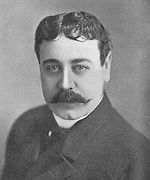
Wilton Lackaye
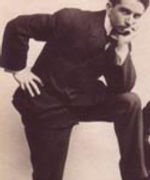
Paul McAllister

Chester Barnett

D. J. Flanagan
Trilby (1915)
Drama
59m
Famous Players Film Company
Director:
Writer:
E. Magnus Ingleton

"The most vital and startling screen adaptation in film annals"
In 1911, the French film company Éclair became the second studio to locate in Fort Lee, New Jersey. Charles Jourjon, its thirty-five-year-old president, commissioned the construction of a brand-new studio with glass ceilings, a laboratory capable of processing 40,000 feet of film per day, dressing rooms and storage areas. When fire destroyed much of the studio on 17th March 1914. Many of its staff, including Jourjon, joined the newly formed World Film Company. Among them was thirty-eight-year-old director Maurice Tourneur, a former artist who had studied under Rodin and Puvis de Chavannes. After directing on the stage with André Antoine, he joined Éclair’s Paris operation in 1912 before moving to the States in May 1914 as producer-director of the Fort Lee facility. He never got to direct in America for Éclair, however; the outbreak of the Great War forced them to transfer ownership of the studio to World Pictures. His first American film was Mother, for William A. Brady.
One of the World Film Company’s biggest stars was Clara Kimball Young, the actress lured to the studio from Vitagraph by Lewis Selznick. To produce her films, Selznick created the Equitable Motion Pictures Corporation, under which Trilby was released. George Du Maurier’s famous work began life as a serial in Harper’s Monthly in January 1894. It was an instant success, spawning widespread merchandising of ‘Trilby’ products and even inspiring ‘Trilby’ themed parties. The author based many of its characters on his own acquaintances, resulting in a lawsuit issued by the artist James McNeill Whistler, who recognised himself in the serial. Harper’s was forced to issue an apology, and Du Maurier had to alter the character when publishing as a book.
Trilby was Equitable’s first release and cemented Kimball Young’s status as one of the picture business’s brightest stars. Recalling the making of the film, the actress wrote, “I threw myself heart and soul into the character. I felt Trilby’s every emotion and approached the final climax forgetful of all else save the character herself.”
While Kimball Young threw herself into her character, her husband James Young grew jealous of Tourneur. Young usually directed his wife, but was directing another film. According to art director Ben Carré, Tourneur “didn’t like Jimmy watching what he was doing, or what his wife was doing.” For his part, Young didn’t like another man directing her in a nude scene. As a compromise, they hung a muslin curtain between the two shooting units.
Tourneur awarded the key role of Svengali to Wilton Lackaye. He had played the part in Paul M. Potter’s 1895 stage production of Du Maurier’s novel and for years after in touring companies and revivals. That Lackaye had portrayed Svengali thousands of times on stage made him almost as big a draw for audiences as Kimball Young in the title role.
His character is almost comically Fagin-esque as the story begins. He is a hanger-on who constantly visits the garret shared by three artists, Little Billie (Chester Barnett), The Laird and Toffee to borrow money and criticise their work. Trilby (Kimball Young), a young model posing in a neighbouring garret, hears Svengali’s music coming from the trio’s room and invites herself in. The men all find her enchanting, but agree when she sings ‘Ben Bolt’ that she is completely tone deaf. While Billie and Trilby share an attraction, Svengali’s attraction to the girl is not reciprocated. However, when he cures her of neuralgia by placing her into a hypnotic trance, she falls under his spell. Despite agreeing to marry Billie, she leaves with Svengali while under his command on the night of her and Billie’s engagement party.


Clara Kimball Young and Wilton Lackaye in Maurice Tourneur's Trilby (1915)
Although Trilby’s running time is just under one hour, it tells its tale at a leisurely pace. Trilby doesn’t fall fully under Svengali’s control until the film is almost half over. This brevity prevents the story from growing stale, but means it devotes inadequate attention to the dysfunctional relationship between the enslaved Trilby and her master. Nor does it satisfactorily trace Svengali’s transformation from a near-comical but vaguely menacing figure of ridicule to a Rasputin-like despot.
Lackaye is very good in the part. A hulking bear of a man, he brings few of the broad, exaggerated gestures so many theatrical stars brought to the screen. Kimball Young always looked older than her age, and at just twenty-five years old, she feels a little too mature for the part of a giddy, free-spirited young woman. She gives a good account of herself nevertheless. Chester Barnett, who often played opposite serial heroine Pearl White, is rather anonymous as the male lead.
Trilby premiered at the 44th Street Theater in New York on 6th September 1915, with a full orchestra of fifty musicians led by the Austrian-American composer Hugo Reisenfeld. The score, which he assembled with the help of theatrical impresario Samuel ‘Roxy’ Rothafel, would be used by many other exhibitors and conductors.
The film met with favourable reviews. Tourneur’s recreation of Paris’s Latin Quarter earned special praise. Moving Picture World reported that his direction, “place this motion-drama among the finest examples of its kind… the scenario displays keen appreciation of what was required… The almost entire absence of “cutbacks” puts “Trilby” in the true drama class, where the human will is shown in action and tells its own story – not by the use of the narrative form.” Charles R. Condon, writing in Motography, enthused over Tourneur’s direction: “With less careful or skillful handling, “Trilby” could have become an ordinary multiple-reel release despite it’s wonderful theme. It’s opportunities for unique effects, delicate expression and moments of subtle humor and dramatic tensity are manifold, yet, without proper treatment by a fully appreciative director might have passed virtually unnoticed.” He also praised Kimball Young’s performance, saying, “[she] gives one of the best impersonations of her screen career. She is perfectly fitted to the role physically, being beautiful in face and figure, and her magnetic personality and proven ability lend to the character the quantities of grace, humor and appeal.” Variety was less enthusiastic in its praise, stating that Wilton Lackaye “gave a most intelligent and not exaggerated conception of Svengali; but this was a distinct disappointment. He might have disregarded a modicum of consistency and contributed a bit of sensationalism.”
World Pictures re-issued Trilby in 1917 with new footage added and a changed ending. Du Maurier’s story has since been filmed several times. Warner Brothers produced the most famous version in 1931, with John Barrymore playing Svengali and Marian Marsh as Trilby.
Sources: The Movies Begin: Making Movies in New Jersey, 1887-1920, Paul C. Spehr; Fort Lee, the Film Town, Richard Koszarski; the Great Villains, Janet Pate; Maurice Tourneur: the Life and Films, Harry Waldman; American Showman, Ross Melnick; Golden Images, Eve Golden.