Ramona (1910)
released 23rd May 1910
Cast:

Mary Pickford

Henry B. Walthall
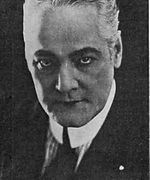
Francis J. Grandon

Kate Bruce

W. Chrystie Miller
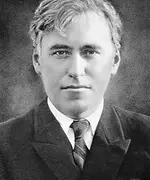
Mack Sennett
Ramona (1910)
Western, Drama
17m
Biograph
Director:
Writer:
D. W. Griffith, Stanner E. V. Taylor

"Adapted from the novel of Helen Jackson"
D. W. Griffith’s film career was still three years ahead of him when he journeyed from San Francisco to Los Angeles in January 1905 to appear in a stage adaptation of Helen Hunt Jackson’s romantic novel Ramona. Like all but the most desperate of theatrical actors, he looked down on the ‘flickers’ or ‘galloping tintypes,’ as moving pictures were then known. Griffith, still working under the stage name of Lawrence Griffith, was to play the lead role of Alessandro, a Native American who falls in love with a Spanish mission girl.
The play was written by Johnstone Jones and Virginia Calhoun, an actress who also played the title character. The play opened at the Mason Opera House in Los Angeles on 27th February 1905. The Los Angeles Herald, reporting on the opening night, noted the leading lady’s nervousness and struggled to find anything positive to say about the play, commenting that, “the drama must suffer considerable remodelling after its first night test. Vigorous and unsparing use of the blue pencil will assist materially in making this version of “Ramona” acceptable and worthy.”
The play toured through Oakland, Fresno and Woodland before ending at San Francisco, where the critic for the San Francisco Argonaut was far less diplomatic than their Los Angeles counterpart: “No one in the company knows how to act,” they wrote, “and Miss Calhoun does not know how to write a play.”
While such a negative reception might have caused many to expel the episode from their memory, Griffith returned to Ramona after taking a Biograph company to California for winter shooting. Perhaps the play revived memories of being reunited with his future wife, Linda Arvidson, with whom he had previously worked while performing with the MacDowell theatrical company. Perhaps, also, he remembered the glowing review he received from the Los Angeles Times, which said: “…anyone who sees him [Griffith] in the death scene of this play will acknowledge with tears and delight his right to this heroic Indian character. He looks the part to perfection. He is tall, straight as an arrow, spare, swarthy and handsome with the classic mould of feature necessary to this role.”
Griffith’s 1910 screen version of Ramona was the second-to-last to be filmed on his first expedition to California. The journey had taken four days on the Black Diamond Express, in a carriage marked “The Biograph Special.” It was on this trip that he also made In Old California (1910), the first film to be shot in Hollywood.
To these city dwellers, Hollywood must have seemed an alien environment. Agnes DeMille, the niece of Cecil, who arrived in 1914, recalled how the streets wound to “the wild, wild hills. [There were] sage brush and rattlesnakes, and coyotes and the little wild deer that came down every night.” Mary Pickford, who played Ramona, recalled, “There was hardly a store…There were gardens everywhere, and they ran down to the very curbs, and flowers spilled into the roadway.”
Pickford was unhappy for much of the company’s stay in California. She missed her mother and sister, and, most of all, her secret love, Owen Moore. She also had to care for her little brother, Jack, a late addition to the group. Linda Arvidson recalled overhearing her say when passing an eastbound train, “God bless all trains going east and speed the one we go on.” Pickford later recalled: “There wasn’t much social life in those days because there was no place to go. Perhaps once a week we’d go to the old Alexandria Hotel Grill for dinner. In the lobby was the million-dollar rug, named because so many deals had been made there. Paul Whiteman played there too, long before he became famous.”
The proximity of the locations in which Helen Hunt Jackson’s drama unfolds may have been the clincher that made up Griffith’s mind to adapt it for the screen. Piru and Camulos, in Ventura County, were seventy miles from Los Angeles. Even before the troupe left for California, the possibility had been discussed in New York. Griffith had insisted that Biograph purchase the motion picture rights from the publisher, Little, Brown and Company—something unheard of in 1910, despite the ongoing legal battle over Kalem’s unauthorised version of Lew Wallace’s Ben Hur (1907). Biograph resisted, arguing it was cheaper to ‘borrow’ the plot and release the film under a different title, but Griffith insisted on using the original title, and the front office relented. Little, Brown and Company received $100, marking the first time a movie studio had paid for the screen rights to a novel. The opening title of the film proclaims, “Adapted from the novel of Helen Jackson by arrangement with Little, Brown & Company. This production was taken at Camulos, Ventura County, California, the actual scenes where Mrs. Jackson placed her characters in the story.”


D. W. Griffith's Ramona (1910)
The story concerns “the white man’s injustice to the Indian,” and focuses on the love between Ramona (Pickford), an orphan raised by the wealthy Spanish Moreno family, and Alessandro (Henry B. Walthall), a Native American seeking work. Ramona’s disapproving adoptive mother (Kate Bruce) banishes Alessandro from the family’s ranch. He returns to his village to find the white man decimating it. Ramona, told by her mother that she is half-Indian, leaves the ranch and is reunited with Alessandro at his village. However, the white man repeatedly drives them and their newborn child from their home.
Filming took place on the 1st and 2nd of April 1910. The identity of the baby is unknown, but leading lady Pickford was responsible for its care. “I had to take care of the baby…all day long and try to keep her in the shade and worry about her bottle and still play the leading part and be the nursemaid at the same time.”
Griffith later claimed that it was while shooting this film that he first used the extreme long shot, although Kemp R. Niver argues in his book, D. W. Griffith: His Biograph Films in Perspective, that he first used it in the film In Old Kentucky (1909). The shot in Ramona to which Griffith referred was nevertheless an influential one; Alessandro, returning to his village after being cast out by Ramona’s mother, witnesses from a mountaintop smoke rising from his village in the valley below. Griffith shot the scene with Alessandro in the foreground so that the audience shares his view of the decimation. It is a shot composition that has been used countless times since.
The film also marked a progression in the sophistication of Griffith’s technique. Ramona comprises 45 scenes shot from 22 different camera positions, more than in any of his previous films. It also made use of 18 title cards; again, far more than he had previously used in the seven months since he had regularly started using them. The complex plot (for the time) made necessary the use of these titles, which were inserted in front of the subsequent action they described.
According to Niver, Griffith shot more than 1,500 feet of film on Ramona, 500 feet more than the maximum one-reel limit allowed by Biograph. Despite having to eliminate key scenes, he still managed to stick close to Jackson’s plot.
Biograph printed a special handbill to be presented to those attending the film upon its release on 23rd May 1910. Promotional material emphasised Ramona’s use of authentic locations. An advertisement in the 28th May 1910 edition of the Moving Picture World revealed that, “the production was made at identical locations wherein Mrs. Jackson placed her characters. The house in which Ramona lived, with its vine-clad verandas and inner courts; the little chapel and the bells from old Spain are all as Mrs. Jackson saw them, producing the effect of absolute authenticity that is unprecedented.”
The film received mostly positive reviews, typified by that which appeared in the Moving Picture World dated 4th June 1910: “Sympathetically acted, with unusually romantic scenery for a background and photographed with a full appreciation of the beauties of the drama and the setting, the picture will linger long in the memory…”
Sources: D W Griffith: An American Life, Richard Schickel; D. W. Griffith: His Life and Work, Robert Henderson; Stagestruck Filmmaker—D. W. Griffith and the American Theatre, David Mayer; Pickford, Eileen Whitfield; Sweetheart: The Story of Mary Pickford, Robert Windeier; D. W. Griffith and the Origins of American Narrative Film, Tom Gunning; D.W. Griffith: His Biograph Films in Perspective, Kemp Niver; Moving Picture World, 28th May 1910, 4th June 1910.