Tess of the Storm Country (1914)
released 30th March 1914
Cast:

Mary Pickford
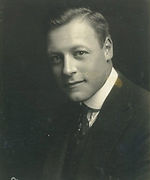
Harold Lockwood
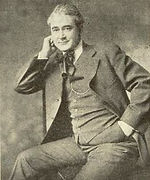
David M. Hartford

Louise Dunlap
W. R. Walters
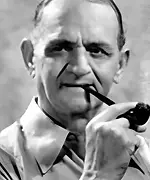
Richard Garrick
Tess of the Storm Country (1914)
Drama
80m
Famous Players Film Company
Director:
Writer:
Grace Miller White, B. P. Schulberg

"The famous tale of a woman's unconquerable faith"
On 25th October 1912, Mary Pickford threw a farewell party at her apartment on Riverside Drive in New York. She was bidding farewell to friends and colleagues at Biograph, the studio that had been her home for three years. From January to May 1913, she took a break from movies to star in Austin Strong’s adaptation of Rostand’s A Good Little Devil on stage for David Belasco. The play was a hit, and Pickford, playing the trying part of a blind girl, won universal praise from critics.
Adolph Zukor bought the rights to film the play on the condition that Pickford reprised her stage role. Zukor, a Hungarian immigrant and former furrier, had co-founded the Famous Players Film Company with theatrical producers (and brothers), Charles and Daniel Frohman in 1912. Pickford considered A Good Little Devil to be one of her worst films. Zukor also appreciated it was a poor movie and withheld its release for a year. He felt such an expensive star needed a better feature-length vehicle for her introduction as a Famous Player. While A Good Little Devil gathered dust in a vault, Zukor offered Pickford a contract. In return for making three movies back-to-back in fourteen weeks, he would pay the twenty-two-year-old actress $500 a week.
Pickford only made two of those pictures – In the Bishop’s Carriage and Caprice – before falling ill. Undeterred, she and Zukor negotiated another one-year contract. Pickford travelled to California with Edwin S. Porter to make Hearts Adrift. She then negotiated a wage increase to $1,000 a week, and made a screen adaptation of Grace Miller White’s 1909 novel, Tess of the Storm Country. The role of Tessibel, an impoverished squatter, was one Pickford hadn’t wanted to accept. “I flatly refused,” she recalled. “Why they put up with me in my youth I don’t know. [Porter] pleaded with me and almost wept, but I had played a barefoot girl in Hearts Adrift and I didn’t want to play another ragged urchin. I was tired of that kind of role. Porter asked me to take it home and read it. I went home and I couldn’t put the book down. When I was halfway through it, I called him at the hotel and told him he was so right.”
Zukor needed Tess to succeed. His practice of showing “famous players in famous plays” was floundering. He had found that many actors who looked good on the stage weren’t so attractive in front of the camera. When he hired Lily Langtry, Porter told him she would photograph as an overweight old woman. He starred the 60-year-old actress in the short film His Neighbor’s Wife (1913) anyway, then packed her off back to New York. Zukor had failed to appreciate that what appealed to theatre audiences didn’t always appeal to moviegoers. Things had become so dire that Zukor borrowed on his life insurance and pawned his wife’s diamond necklace to secure the $10,000 needed to finance the movie.
Porter shot the film in California, far from the unforgiving East Coast winter. Exposed film had to be sent to New York for processing, meaning nobody involved in the shoot got to see the result of their efforts while they were making the film. As well as directing, Porter acted as cameraman (and cameraman’s assistant!), producer and electrician. The shoot was not a happy one. After working with Griffith, a visionary of the cinema, Pickford found the more workmanlike Porter an unsatisfactory director. She claimed he showed not “the slightest interest in acting or the dramatic aspects of motion pictures.” Porter, an engineer by trade, made no secret of the fact that he was more interested in the technical side of filmmaking. “He knew nothing about directing. Nothing,” Pickford later recalled. “[Porter] had none of the ideas, like close-ups, that Griffith had developed.”
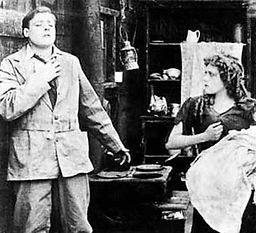
Harold Lockwood and Mary Pickford in Edwin S. Porter's Tess of the Storm Country (1914)
By now, Pickford was such a major star her mere name on the screen wasn’t enough to announce her participation in Tess of the Storm Country. The opening titles declare, “Daniel Frohman presents America’s Foremost Film Actress Mary Pickford…”. The actress emerges from behind curtains holding an enormous bouquet, which she arranges in an ornate vase. In her first scene, she seems to emerge from the very ground itself, unfolding and stretching after falling asleep outside the shack she shares with her beloved father (David Hartford). Her name is Tessibel, and she and her father are squatters in a shanty town on land owned by the irascible millionaire Elias Graves (William Walters). His attempt to evict the squatters fails, so he deprives the squatters of their livelihoods by having a local ordinance passed prohibiting net fishing. While Tess begins a tentative romance with Graves’s son Frederick (Harold Lockwood), her innocent father is accused and convicted of killing a gamekeeper and sentenced to hang. Meanwhile, Frederick’s unwed sister Teola (Olive Carey) discovers to her horror that she is pregnant. Tess agrees to raise the child to hide Teola’s terrible secret from her family.
Tess of the Storm Country is not a good film. In fact, Pickford would buy the rights from Zukor in 1922 so that she could remake it. Much of this is because of Porter’s perfunctory direction. As Pickford rightly pointed out, he makes no use of close-ups so that scenes that should be emotionally charged – such as when Tess’s father is sentenced to hang – are flat and cold and as uninspiring as the descriptive intertitles that link them. Dressed in patchwork rags, Pickford’s attempts to inject life into this dull scenario sometimes tip over into melodramatic gesturing.
The fault isn’t all Porter’s, however. Future executive B. P. Schulberg’s scenario sometimes verges on the incoherent and pays little attention to the story’s timeframe. For example, Tess’s father, forgotten by all it seems, supposedly languishes in jail awaiting his hanging for the entire second half of the movie. During this time, Teola becomes pregnant and gives birth to her baby. She then passes the child over to Tess for an indeterminate length of time (but long enough for the seasons to change and a hard winter to set in). It’s as if he’s just kept hanging around for a happy ending. Similarly, the baby, whose gender barely merits a mention, is nothing more than a prop.
Despite its many failings, and much to Adolph Zukor’s relief, Tess of the Storm Country was a huge hit. Its success cemented Pickford’s status as the country’s top movie star and secured her a then-unprecedented level of fame. Her co-star Harold Lockwood, however, would fare less well. He looked set for a career as a top screen star until he contracted flu during the global Spanish flu pandemic and died at thirty-five.
Reviews of Tess of the Storm Country were full of praise. The Motion Picture News suggested that Pickford was “probably better fitted than any other screen actress of the day [to capture] the most vital elements of Tess,” while Motography described the film as “a symphony in acting, story, photography and production.”
Sources: Pickford: The Woman Who Made Hollywood, Eileen Whitfield; Mary Pickford: America's Sweetheart, Scott Eyman; Mary Pickford and Douglas Pickford: The Most Popular Couple the World Has Ever Known, Bootn Herndon; Sunshine and Shadow, Mary Pickford.