The Sign of the Cross (1914)
released 21st December 1914
Cast:
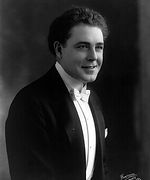
William Farnum

Rosina Henley
Sheridan Block
Morgan Thorpe

Ethel Gray Terry
Lila Barclay
The Sign of the Cross (1914)
Drama
67m
Famous Players Film Company
Director:
Writer:
Not credited

"The Sign of the Cross" is the cinema masterpiece of the age" The Bioscope, november 1914
Adolph Zukor was typical of the men responsible for shaping the movie industry in its early years. Like William Fox, Carl Laemmle and Sam Goldwyn, he was a Jewish immigrant who travelled to America from Europe in search of a better future. All were driven men of ferocious tenacity, unafraid of hard work and willing to do whatever was necessary to succeed.
He initially found success not in the movie industry but in the fur trade, providing employment for 25 people with Zukor’s Novelty Fur Company in Chicago. By 1903, he already enjoyed a privileged lifestyle. He lived with his wife and two children in a spacious apartment at 111th Street and Seventh Avenue in New York’s prosperous German-Jewish district.
It was in 1903 that his cousin, Max Goldstein, invited him and his associate, Morris Kohn to invest in Mitchell Marks’s chain of theatres. Together, they opened a penny arcade, the Automatic Vaudeville Company, on 14th Street in New York. The business proved profitable. Further branches in Newark, Philadelphia and Boston soon followed using finance provided by Marcus Loew. By 1910, Loew, an American business magnate, would become Zukor’s business partner, operating a chain of movie theatres.
By 1912, Zukor was certain that the future lay with feature-length movies. He sold his shares in Loew’s company to finance the purchase of the North American rights to Les amours de la reine Élisabeth (Queen Elisabeth) starring the famous stage actress Sarah Bernhardt. He premiered the picture in New York as a special roadshow attraction and achieved a level of success that proved audiences would sit through longer films and pay to watch famous stage actors on the screen.
Zukor founded the Famous Players Film Company to handle the US distribution of the film. He adopted the slogan ‘Famous Players in Famous Plays’ and obtained financial and theatrical backing from theatrical impresarios such as the Frohman brothers.

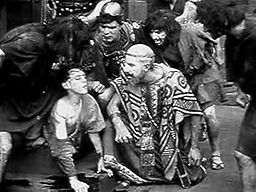
Frederick A. Thomson's The Sign of the Cross (1914)
Zukor soon graduated from importing foreign features to producing his own in a converted armoury on 26th Street in Manhattan. Famous Players’ first films were screen adaptations of popular plays and novels such as The Count of Monte Cristo (1913) and The Prisoner of Zenda (1913).
Frederick A. Thomson’s Roman epic The Sign of the Cross certainly matched the profile of Famous Players’ preferred material. It also offered Zukor a chance to compete with Italian epics such as Cabiria and Quo Vadis that were so popular then. In fact, its plot bore so many similarities to Quo Vadis? that to cut costs Thomson inserted shots from the climactic arena scenes from Enrico Guazzoni’s epic into his film, with no apparent objection from Società Italiana Cines.
The film was adapted from the popular British playwright Wilson Barrett’s play, an attempt to bridge the gap between religion and the stage, which opened on Broadway in November 1896. To play the lead, Zukor hired William Farnum, who had found success in Selig’s adaptation of Rex Beach’s The Spoilers. Stage actress Rosina Henley provided Farnum’s love interest.
Its story takes place in Rome in 64 A.D., during Nero’s (Sheridan Block) persecution of Christians. Marcus Superbus (William Farnum), the Prefect of Rome, falls for Mercia (Rosina Henley), a Christian woman. Marcus questions the persecution when Mercia is imprisoned for her beliefs. Nero agrees to spare Mercia if she will renounce her faith, but she refuses despite Marcus’s pleas. By doing so, she condemns herself to certain death in the arena.
Thomson filmed The Sign of the Cross on an epic scale with superior costumes and production design, but it still doesn’t compare to the historical spectacles coming out of Italy. The plot takes some time to get moving but ramps up the pace around the halfway mark. William Farnum doesn’t possess a physique suited to a Roman soldier’s outfit, but he and Rosina Henley do at least deliver reasonably subdued performances. Sheridan Block and Ethel Gray Terry as Superbus’s unrequited admirer show no such restraint, delivering the kind of over-the-top performance that makes scenery nervous. Thomson keeps his camera remote from the action, hardly ever thinking to depart from shooting his actors full-figure, as if filming a stage play. In fact, he opts for a medium close-up only to treat us to Block’s mugging as the semi-crazed Nero observes the carnage in the gladiatorial arena.
The Moving Picture World praised the film, predicting a reasonable return without enthusing too extravagantly about it. Reviewer George Blaisdell suggested “The picture will appeal to those who are ordinarily indifferent in matters of faith; to men and women of religious conviction deep or less deep it should appeal with great strength,” before ending his review by expressing his opinion that “The Sign of the Cross is well done.”
Sources: The Public is Never Wrong, Adolph Zukor; The Moguls, Norman Zierold.