A Fool There Was (1915)
released 12th January 1915
Cast:
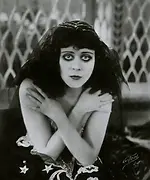
Theda Bara

Edward José

Mabel Frenyear
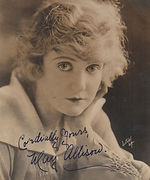
May Allison

Runa Hodges

Clifford Bruce
A Fool There Was (1915)
Drama
67m
Fox Film Corporation
Director:
Writer:
Roy L. McCardell, Frank Powell

"$100,000 worth of women's gowns shown"
Although director Frank Powell had used Theda Bara as an extra in The Stain, his last film for Pathé before defecting to Fox, she was unknown when Fox’s public relations men Al Selig and John Goldfrap, introduced her to newspapermen in a Chicago hotel room in January 1915. Powell had approached the twenty-nine-year-old actress (who, in the vogue of the time, admitted only to being twenty-four) with a soon-to-be-timeless question: would you like to be in the movies? Unlike many who asked that question, Powell was on the level. He placed Bara – then plain Theodosia Goodman of Cincinnati – close to the camera in a crowd scene in The Stain to see how she filmed and to gauge her response to direction.
Like many of his contemporaries – Zukor, Loew, Laemmle – William Fox, a Jewish Hungarian immigrant, made his money in the garment industry. In 1900, at the age of 21, he co-founded The Knickerbocker Cloth and Garment Company, which made a profit of $50,000 just four years later. In the same year, 1904, he sold the business and opened a nickelodeon, hiring a magician to perform in front of the converted store to draw in the crowds. His empire expanded to 25 nickelodeons, and Fox established a film exchange – a firm that purchased films from producers and leased them to exhibitors. Then, the Motion Picture Patents Company moved to monopolise the industry by cutting off the supply of films to exchanges that refused to purchase a licence from them. Fox fought back.
A lawsuit he brought against the Trust succeeded in 1912, effectively ending its stranglehold over the industry. Following his victory, Fox moved into production, buying a story called Life’s Shop Window for $100 and spending $4,500 to turn it into a feature starring Claire Whitney and Stuart Holmes. He didn’t like it, but audiences did.
The Fox Film Corporation only truly established itself with the release of A Fool There Was, its third release. Based on a popular play of the same name from Porter Emerson Browne which was inspired by Rudyard Kipling’s poem ‘The Vampire’ which was itself inspired by a painting by Philip Burne-Jones, it told the lurid tale of a vamp who preys on wealthy men, using them to satisfy her sexual and financial needs before discarding them once they are of no further use to her. To play this part, they needed an exotic, mysterious actress – an unknown who could be moulded into any persona Fox and his publicists felt best served their cause. Fox agreed with Powell that Goodman was the right woman for the part but changed her name to Theda Bara. Theda was a contraction of her own name, while Bara was a shortened version of her Swiss grandparents’ surname, Barranger. They also invented an exotic past for their new creation that bore no relation to the truth. And to introduce their vamp to an unsuspecting world, they arranged an unveiling that would serve as a formula for pre-release publicity for years to come.
They decorated the perfumed Chicago hotel room they used to introduce their new star in a style befitting her. Enormous bouquets of roses and lilies wilted in the room’s stifling heat. Behind heavy velvet drapes ceremoniously drawn aside, Theda Bara, dressed in velvet and furs, reclined on a chaise.
Selig and Goldfrapp had already provided the astounded reporters with details of their new star’s history. The only child of the fictitious French actress Theda de Lyse and Italian sculptor Guiseppe Bara, she was born in the shadow of the Sphinx in Egypt. As a child, she moved to Paris with her parents, where she followed her mother as an actress in the Grand Guignol. Spells at the Gymnase and the Theatre Antoine followed. Discovered by the director Frank Powell, she escaped war-torn France to the comparative safety of America.
After the unveiling, so the story goes, the hosts ushered the gathered reporters from the room. One remained, however, a young journalist called Louella Parsons, who would one day become a Hollywood gossip columnist almost as famous as the stars she wrote about. Parsons watched the actress divest herself of her veils and rush to a window. Throwing it open, Bara gasped, “Give me air!” in a common mid-American accent completely unlike the one she had spoken while reciting her rehearsed lines to the news reporters. Selig and Goldfrap, both former newspapermen on The New York World, had never intended to fool the assembled reporters into believing Bara was an authentic woman of mystery born in an exotic land. They knew their hard-bitten colleagues would never fall for it. Just in case, though, they planted Parsons to ensure she leaked the story to the world, thus ensuring unparalleled publicity.


Theda Bara and Edward José in Frank Powell's A Fool There Was (1915)
Edward José, a Belgian stage actor who entered films in 1910 and would turn to directing later in 1915, played Bara’s victim in A Fool There Was. He also laid claim to discovering Bara. He was among the cast and crew of twenty Powell took to St. Augustine, Florida, in November 1914 for location shooting. Their journey was almost instantly disrupted when the British naval cruisers Lancaster and Berkshire intercepted their German yacht Essen before it even left New York harbour. Britain had recently declared war on Germany, and the vessel’s German name combined with the fact it wasn’t flying an American flag had aroused their suspicions. That José spoke German only aggravated the situation, resulting in a delay of several hours until a cable from Fox General Manager Winfield Sheehan put the British navy’s mind at rest.
Things got no better for Bara once filming began in St. Augustine. “I shall never forget the terrible experience of my first scene,” she later recalled to a reporter, “I had to wear a make-up in the public street and I felt like a lost soul… [It] was taken on the steamship pier. There must have been 2,000 people standing around looking at me. The whole world seemed to have turned into human eyes… I trembled, I shook, I all but died right there on the dock.”
The orthochromatic film used in the silent era was blue-sensitive, so that faces without make-up appeared dark on screen. Actors had to wear heavily layered greasepaint in shades of pink, white or yellow to achieve a natural look on camera. Eyes had to be rimmed with black liner and dark red or brown eyeliner to stand out. It was hardly surprising the actress felt uncomfortable. Bara also claimed she almost quit upon discovering some scenes called for her to wear a one-piece bathing suit – a shockingly daring garment for 1914.
Because the Fox Company was still finding its feet, money was scarce, and Powell was under instruction to shoot the film as quickly as possible. This meant dispensing with rehearsals and retakes. That is why in one scene an agitated Bara keeps adjusting the recalcitrant nightgown strap that repeatedly slips from her shoulder. Under normal circumstances, a director would reshoot such a distracting action.
Bara’s character has no name in the film – the titles identify her only as The Vamp. She also seems to have no purpose other than to destroy men and does nothing that doesn’t help fulfil that purpose. She destroys successful businessman John Schuyler (José) for the flimsiest of reasons: his wife (Mabel Frenyear) snubs The Vamp when she offers her daughter (Runa Hodges) a flower. On board an ocean liner bound for England, she strikes while Schuyler is still within sight of his family on the harbour – and immediately after her previous conquest has shot himself in a jealous rage (a scene that includes Bara’s immortal line, “Kiss me, my fool.”). Soon, he is under her spell, neglecting his job in England, ignoring his family across the ocean, sinking ever further into a pit of drunken depravity at her hands.
The passage of more than one hundred years hasn’t been kind to A Fool There Was. More of a 1910s version of an event movie than a work with any real artistic merit, its sensationalised aspects now seem laughably dated. But Fox understood that even the most upbeat of people sometimes entertain thoughts of their own self-destruction; that it holds a dreadful fascination, and that to watch a film like A Fool There Was is to experience that downfall by proxy. In 1915, to a far less sophisticated audience still shaking off the influences of more than half-a-century of Victorian moralism, Schuyler’s downfall must have seemed horribly feasible.
A Fool There Was received generally favourable reviews. The Moving Picture News, stated that it fell to the film “to penetrate with the baldness of its nauseating truths the depths of the human tide where the language of a poetic oration is non-understandable,” and proclaimed the production “a successful artistic effort in every respect.” The New York Dramatic Mirror described it as “bold and relentless; it is filled with passion and tragedy… shot through by the lightning bolt of sex.”
The film catapulted Bara to stardom in a way no film actor had previously experienced. All of her contemporaries had served some kind of apprenticeship before achieving recognition. The likes of Mary Pickford and Florence Lawrence had toiled in anonymity for years before studios finally relented and made their names known. Even Charlie Chaplin played a supporting role in a couple of movies before achieving fame. For Bara, stardom was instant. It was therefore perhaps inevitable that her star would shine far more briefly than most others.
Sources: Vamp: The Rise and Fall of Theda Bara, Eve Golden; The Man Who Made the Movies, Vanda Krefft.