Carmen (1915)
released 1st November 1915
Cast:
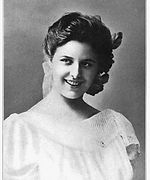
Geraldine Farrar

Wallace Reid

Pedro de Cordoba
William Elmer

Horace B. Carpenter

Jeanie Macpherson

"Geraldine Farrar and Wallace Reid in the picture that played to 24,211 people in one day at New York's Strand"
D. W. Griffith always had Henry B. Walthall in mind for the role of ‘the Little Colonel’ in his monumental Civil War epic The Birth of a Nation. But shortly before filming was due to begin, rumours circulated that Walthall was ill and unable to play the role. Griffith told six-foot three-inch, twenty-three-year-old Wallace Reid to be ready to take over the role. The Little Colonel, it seemed, was to become the Big Colonel.
Reid’s wife, the actress Dorothy Davenport, recalled that “Wally’s enthusiasm was unbounded! Costumes were made up to fit him, and about five-hundred feet of film was made of Wally in a few scenes of the part.” But then the news came that Walthall’s illness was not as bad as first feared. The official line was that he had suffered a recurrence of the malaria he contracted while serving in the army during the Spanish-American War in 1898. Some believed, however, that Walthall, who was an alcoholic, had been drying out after a binge. “Wally was incensed to the point of mayhem,” Davenport remembered.
Griffith awarded Reid the role of the blacksmith who single-handedly fights off a mob of drunken negroes; it must have been scant consolation to the young actor who thought he had snared the starring role. It’s possible he channelled at least some of his disappointment and frustration into his few brief but memorable scenes. Elmo Lincoln, who played opposite Reid, remembered, “The fight was terribly realistic. Round tables were used; one table was smashed. The Negroes got badly banged up in the fracas. Several persons in all were injured and had to be hospitalized. The fight started in rehearsal with such ferocity that Griffith stopped it and said he would take the close-ups first. After the close-ups were taken, the fight resumed for the camera. All thought of further rehearsals was abandoned.”
Reid’s dynamic performance certainly impressed Famous Players’ director and partner Cecil B. DeMille. “When Jesse Lasky and I had gone to see The Birth of a Nation, I had noticed in it a young man playing a very small part as a blacksmith,” DeMille explained in his autobiography. “He stayed in my mind. He was handsome and clean-cut; he knew how to behave in front of a camera, making even his brief appearance memorable. His name, I made it my business to discover, was Wallace Reid. He had a few years’ experience in films, but in parts so small that he welcomed the extra dollars he could make playing mood music for the big stars. I sent for him, and our conversation confirmed my belief that he was star material himself. I felt, as I have often felt since about stars and stories, that the public would like what I liked in Wally Reid.”
“Finding him was like finding a 180-pound diamond,” Lasky crowed in his autobiography. “For within a year we would be reaping gratifying profits from eight pictures featuring his brawn and irresistible appeal, and the tonnage of his fan mail would be making our distaff stars jealous.”
Although Reid had expressed a desire to return to directing – he helmed over sixty shorts between 1912 and 1915 - his contract with Famous Players was for acting only. Any hopes the actor nursed of directing during his time with the studio were dashed – the opportunity only came his way again when he joined Universal in 1916.
Lasky was also on the search for new female talent, and Morris Gest, the son-in-law of theatrical impresario David Belasco, believed he had the perfect candidate. Geraldine Farrar had been a huge star of the opera since her 1901 Berlin debut as Marguerite in Faust. Belasco, upon witnessing her in Madame Butterfly, had declared, “If she lost her singing voice today, she would still be the greatest dramatic actress in America.”
At a dinner party held by Farrar, the conversation had turned to films. She initially laughed off Gest’s suggestion that she would be perfect for the movies. The previous year in Berlin, she had received an approach from a film company, but seeing a film of the operatic soprano Emily Destinn in a lion’s cage had dissuaded her. “The circus stunt was awful,” she recalled. “Of course, I refused to consider such a peculiar avenue of activity.”
Undeterred, Gest invited her to a screening of The Girl of the Golden West at the Strand in New York. She was astounded by the size and grandeur of the theatre, declaring it was almost as big as the Metropolitan Opera House. Gest once again planted the idea in her mind of appearing in pictures. This time, the opera star gave his suggestion more serious consideration.
She was finally swayed after Gest invited Jesse Lasky to see Farrar perform at a matinee performance of Madame Butterfly at the Metropolitan. After the performance, Gest introduced Lasky to Farrar backstage. The producer wasted no time. “Miss Farrar,” he said. “I don’t know whether you have ever seen a motion picture, but my company makes them, and I’d like to persuade you to do the story of Carmen for us. We have no trouble securing famous plays and engaging their stars, but they’re always afraid acting in a movie will hurt their stage prestige. I could see by the ovation you got today that your prestige is such that whatever you do, your public will accept it as right.”
“You think I could turn the tide?” Farrar asked.
“I’m sure other stars would follow your lead,” Lasky assured her, “and I can see that you’d photograph beautifully. If you consent, I’m prepared to offer you – in addition to whatever salary we agree on – a number of other inducements.”
Lasky offered all he could think of: DeMille, his best director; a private railroad car to take her and her family to Hollywood; a furnished two-storey house with staff and servants during her stay; a car and chauffeur, and a private dressing room at the studio.
Unable to resist such incentives, Farrar agreed to an eight-week contract that would pay her $35,000. The contract stipulated she would work only six hours per day: three hours in the morning and three in the afternoon, separated by a break from midday of two hours.
Farrar left New York from the Jersey City station on Monday, 7th June, accompanied by her parents, Morris Gest, David Belasco, and what Moving Picture World described as “an elaborate entourage of managers and attendants.” She arrived in Hollywood four days later on Friday 11th June 1915, where she was greeted by Mayor Rose of Los Angeles. School children scattered flowers over the carpet from her private carriage to the studio’s awaiting automobile, which whisked her off to her rented house. There her staff of four waited to greet her. Then, to the studio, where she acquainted herself with her specially constructed bungalow, furnished with wicker furniture and a piano, and comprising a dressing room, reception room, kitchen, and a workroom.
The following night Famous Players formally welcomed her at a glittering reception, dinner and dance at the Hollywood Hotel. Those present included Adolph Zukor and his wife, Sam Goldfish, Mary Pickford, Owen Moore, Blanche Sweet, Thomas Meighan and Carlyle Blackwell. Talking to Scott Eyman for his biography, Cecil B. DeMille, Empire of Dreams, Bessie Lasky recalled, “The decoration consisted of awkward bowls of poppies, wisteria and roses. The wives stood in lines with their husbands, introducing everyone to the guest of honor and her family. Miss Farrar looked ravishing dressed in a white brocaded satin evening gown trimmed in black Chantilly lace. Her jewels were worn with great dignity. She had a heavy necklace of emeralds and pearls, and her smile enchanted even the old ladies who were peering through the lighted windows of the porch.” The assembled guests dined on platters of chicken, bread and butter sandwiches and salad after hearing the guest of honour sing an aria from La Bohème.


Geraldine Farrar and Jeanie Macpherson in Cecil B. DeMille's Carmen (1915)
William C. de Mille, who wrote two of the screenplays for the three films Farrar made during her first spell in Hollywood, recalled a certain amount of trepidation around the studio prior to the diva’s arrival. Its staff were unaccustomed to working with opera stars; rumours of their ‘artistic temperament’ and ‘unreasonableness’ circulated; to save their voices when angry, it was whispered, stars of the opera threw things and broke furniture to express their displeasure. The personnel needn’t have been anxious. Farrar, who insisted on being called Gerry on set, was a pleasure to work with: “kind, considerate, and hail-fellow-well-met with the lowliest extra or newest property boy.” When Jesse Lasky mentioned while showing her around her new rented home upon her arrival that Cecil B. DeMille had requested a meeting the following day once she was rested from her journey, the singer responded, “Just give me a few minutes to change and I’ll go and see him now.”
She arrived for work at dawn on her first day and was perplexed to find the studio virtually deserted. On her second day, DeMille met Lasky as he arrived for work and ushered him through the studio orchard to the set for Maria Rosa, Farrar’s first film. The entire staff was gathered around Farrar’s bungalow next to the set, listening to her singing an aria from Madame Butterfly. During filming, whenever a crew member or actor went missing, the first place anyone looked was outside Gerry’s bungalow.
Although Famous Players had lured Farrar to Hollywood with the promise of appearing in a screen version of Carmen, they filmed Maria Rosa first. DeMille wanted their new star to get used to performing for the camera. He felt that by filming Maria Rosa first, he would coax a more natural performance from her for the more important release. The studio could hold back Maria Rosa until after Carmen. Farrar accepted the news with her customary equable nature, and Maria Rosa was filmed in twelve days in June 1915.
Directing Farrar in her debut role, DeMille felt she had a natural talent for screen acting. However, a technical problem gave rise to unexpected anxiety. Upon viewing the rushes, DeMille discovered the camera washed out Farrar’s grey eyes under the glare of the studio lights. She looked as if she had no pupils at all, merely solid white eyeballs. To overcome the problem, he hung large black velvet curtains behind the camera. By focusing on them while acting, Farrar’s retinas would naturally enlarge, making them visible to the camera.
Once filming of Maria Rosa was completed, work began on Carmen. However, Lasky’s plan to bring Bizet’s famous opera to the screen had hit a snag even before Farrar’s arrival in Hollywood. The opera was under copyright – and the holders were demanding a king’s ransom for permission to film it. William C. de Mille recalled being summoned to a meeting with Lasky and his brother Cecil after he had already begun work on the script. In response to his brother’s enquiry about how he was getting on with it, de Mille explained he had written a “mighty good part for ‘Michaela.’”
“Is Michaela in the book?” his brother asked.
“What book?” de Mille replied.
Lasky and DeMille had hoped their writer was adapting the Prosper Mérimée book which had formed the basis for Bizet’s opera. The studio chief explained the problem: the studio couldn’t use the opera for which their most expensive star was world famous. It also couldn’t not make Carmen because they had already announced and advertised it. “The situation is then,” the disbelieving writer summarised, “that we can use Mr. Mérimée’s story, which none of our audience ever heard of, to dramatize an opera they all know but which we can’t use.” When the other two men confirmed his summary, de Mille wailed, “Michaela’s not in Mérimée but she is in the opera!”
Cecil B. DeMille, who was both Famous Players Director-General and William de Mille’s little brother, promptly stomped on his sibling’s self-pitying outburst. “Oh, don’t be so damned academic. You’ve got smugglers and a tavern and soldiers, and a fight between two dames in a cigar factory (and give that the works, too), and the camp in the mountains, and best of all the bullfight. All that’s in Mérimée, and you’re supposed to be a dramatist, so if you can’t make the audience think they’re seeing the opera, without butting into their damned copyright, you’d better go right home and take a big dose of Lydia Pinkham’s Compound*…”
Despite his protests, de Mille delivered a script based on the Mérimée book, and filming began on 28th June 1915. The film’s most memorable scenes are the climactic bullfight and the cigar factory brawl. DeMille filmed the bullfight in a purpose-built arena constructed under the supervision of the Los Angeles municipal buildings and amusements bureaus. He used Mexican matadors and ten cameras to capture the action. One bull tossed the matador doubling for Pedro de Cordoba into the air and tried to gore him where he landed. By freakish luck, the bull’s horns were set wider apart than usual, resulting in its lifting the matador into the air when it tried to gore him. DeMille’s cameras caught the entire episode.
In the fight between Carmen and Frasquita (played by Jeanie Macpherson), Farrar’s first punch almost dislodged Macpherson’s wig. Knowing better than to stop acting until the director called ‘Cut!’ she continued brawling. To audiences, she looks as if she is trying to protect herself from Carmen’s ferocious assault, when in fact she is trying to keep her wig in place.
While Farrar’s easy-going nature was a pleasant surprise to DeMille, she did make one request of the director. She asked for an orchestral accompaniment “for certain tempi and phrasings.” DeMille swiftly accommodated her, engaging Melville Ellis to play the piano that inspired Farrar’s performance. While musical accompaniment on set wasn’t unheard of in 1915 – James Kirkwood used an orchestra and cabaret singers to create a mood for his players while filming The Gangsters of New York the year before – it is believed that Farrar made the practice commonplace.
With filming complete, Lasky was keen to release Carmen to an expectant public as early as possible. Raoul Walsh at Fox had read in Variety that Famous Players planned to make a version of Mérimée’s book and had persuaded William Fox he could beat them to the screen using existing sets and with Theda Bara playing the lead. Fox gave him the go-ahead and, according to Walsh, he was filming his version within two days.
Problems arose with the censors, however, who objected to a number of scenes in DeMille’s picture. Moving Picture World published a scathing piece on the Pennsylvania censors’ concerns in its 16th October edition: “Pennsylvania just at this writing has a fair lead in the idiocy of its censorial decisions… They have “slashed up” “Carmen.” Think of it… The objection to one scene was that “it made the censor shudder.” Bless his dear old head…”. Lasky pushed back, and the censors relented, scaling back their demands so that the studio had to make only a few minor changes.
The movie premiered in front of a reported audience of 3,000 in Boston, Farrar’s hometown, at the Boston Symphony Hall on Friday 1st October 1915. Farrar told reporters – perhaps a trifle ingenuously – that “The opera always imposed restraints and limitations on my Carmen. The technique of the opera, especially its musical requirements, had a cramping influence… The Carmen of the opera, as far as characterization goes, was but a rough sketch after all. The screen gave me the chance for a finished picture.”
Farrar certainly gives a confident and spirited performance in her screen debut, dominating the screen as the gypsy femme fatale. Although she loves the bullfighter Escamillo (Pedro de Cordoba), to help her kinsmen smuggle contraband into the city, Carmen seduces young Don José (Wallace Reid), the conscientious Civil Guard officer who has refused them entry. She takes a job in a cigar factory where she can be closer to her prey, and after dancing in a tavern, she distracts him while the contraband is smuggled inside. After falling under her spell, the young officer kills a fellow guardsman to prevent her arrest. Only when he is on the run does he discover that her love for him was a cruel deception…
Although she was a pretty woman, Farrar was not strikingly beautiful, so she relied on a feisty, spirited portrayal to make us believe men would destroy themselves to be with her. This she manages admirably, demonstrating a natural aptitude for screen acting with a performance that many established film actresses would have struggled to match. She and Reid certainly generate some heat, although it is that catfight that so troubled the censors that stands out. Farrar and Macpherson show no restraint as they wrestle one another in the crowded confines of the factory. To see a refined star of opera unsheathing her claws in such a ferocious fashion must have been quite a spectacle for audiences in 1916.
Both Famous Players’ and Fox’s versions of Carmen went on general release on 1st November 1915. The critics favoured DeMille’s version, but Walsh’s pulled in bigger audiences. Lasky wasn’t too concerned: for an outlay of $23,429.97 his version of Carmen earned $147,599.81.
Kitty Kelly, writing in The Chicago Tribune, enthused that, “One cannot do justice to Carmen. It is a picture of finesse, encompassing the sincere efforts of a great player…of a great director and of a loyal studio support.” The critic for the New York Dramatic Mirror expanded on its leading actress’s impact: “Geraldine Farrar has put her heart and soul and body into this picture, and without the aid of the magic of her voice, has proved herself one of the greatest actresses of all times. Her picture, Carmen, will live long after her operatic characterization has died in the limbo of forgotten singers. Her acting in this production is one of the marvels of the stage and screen, so natural, so realistic that it is hard to believe that it is acting.”
*Lydia Pinkham’s Compound was a popular American medicine for “female complaints”.
Sources: I Blow My Own Horn, Jesse Lasky with Don Weldon; Cecil B. DeMille: Empire of Dreams, Scott Eyman; Cecil B. DeMille: A Life in Art, Simon Louvish; Wally: The True Wallace Reid Story, David W. Menefee; Such Sweet Compulsion, Geraldine Farrar; Hollywood Sage, William C. de Mille; Raoul Walsh: The True Adventures of Hollywood’s Legendary Director, Marilyn Ann Moss; The Complete Films of Cecil B. DeMille, Gene Ringgold and Dewitt Bodeen; Silent Film Sound, Rick Altman.