Fanchon the Cricket (1915)
released 19th May 1915
Cast:

Mary Pickford

Jack Standing
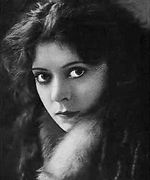
Lottie Pickford

Gertrude Norman

Russell Bassett

Richard Lee
Fanchon the Cricket (1915)
Drama
75m
Famous Players Film Company
Director:
Writer:
James Kirkwood

"The supreme favorite of the screen, Mary Pickford in one of her greatest characterizations"
Famous Players’ Fanchon the Cricket marked the first collaboration between Mary Pickford, the world’s biggest movie star, and Frances Marion, a recent recruit to the film industry who would become Hollywood’s greatest female screenwriter. The two women would form a close friendship that lasted over fifty years.
A native of San Francisco – and a survivor of the 1906 earthquake – Marion moved to Los Angeles with her business executive husband, Robert Dixon Pike, in January 1912. She worked as a commercial artist, drawing posters at Oliver Morosco’s theatre. It was at a farewell party for James Gleason, a member of Morosco’s company who had written a play that was to be produced in New York, that Marion met Pickford’s husband, Owen Moore. She found the actor a little too slick for her liking, “He overworked the affected charm and mannerism of the professional Irishman,” she remembered, and was dismayed when he responded to her praise of Pickford by remarking, “Mary has an expressive little talent. Hardly what one would call cerebral.” Despite her dislike of him, she accepted Moore’s offer to arrange a meeting with his wife.
They met at the Famous Players studio in the spring of 1914. Marion sensed “a strange watchfulness behind her steadfast gaze” but they bonded over their shared ambition and failing marriages. By then, Marion and her husband were leading separate lives, and despite the rose-tinted descriptions of Pickford’s marriage in the press and remarrying at the Mission San Juan in Capistrano during Allan Dwan’s marriage, she and Moore were drifting apart, their estrangement hastened by his drinking and her mother’s interference. That first meeting lasted only an hour, but the guard at the studio gate commented to Marion as she left he was amazed “Miss Pickford spent so much time with her.”
Marion’s marriage broke down in 1915. Pike returned to San Francisco, and, blaming herself for the marriage’s failure, Marion refused to accept any financial settlement. By then, she was working at the Balboa studio based in Long Beach; although taken on as a writer, she spent most of her time playing small parts in low-budget dramas and westerns. Knowing she was unhappy, Pickford offered her a job working with her, both as an actress and a writer. Fanchon the Cricket, which Marion co-wrote with Pickford’s then-lover James Kirkwood (who also directed), was the first of almost twenty collaborations between her and Pickford. It was based on the 1849 novel by George Sand and was the only feature-length silent adaptation of her work. Herbert Brenon had previously made it as a short starring Vivian Prescott in 1912.
It was not uncommon for Pickford to find roles for her siblings in her films, but Fanchon the Cricket marked the only time she shared the screen in a feature-length movie with both Lottie and Jack. Lottie played the part of Madelon, fiancé of the boy whose heart Pickford wins, while Jack had the smaller role of a bully. Each relied on their more successful sister to sustain their own more modest screen career.
Lottie had recently starred in her first feature-length movie, The House of Bondage, a ‘white slave trade’ drama that failed at the box office, partly because censors hacked it to pieces. One critic denounced it as “vile and revolting stuff… How any human being can have the base effrontery to offer such a digest of dirt for public exhibition is utterly beyond [this critic’s] comprehension.” She had also found a leading role in the serial The Diamond from the Sky – but only after Mary had turned it down. During the filming of that serial, much to the anger of its producers, Lottie had fallen pregnant after secretly marrying New York broker Alfred Rupp. They were forced to invent various means of disguising her condition in her scenes, and effectively blacklisted her from the industry. Ironically, what should have marked the start of a period of domesticity for Pickford’s younger sister triggered a descent into the same dissolute lifestyle enjoyed by little brother, Jack.


Mary Pickford in James Kirkwood's Fanchon the Cricket (1915)
Despite his clean-cut All-American looks, Jack Pickford had always possessed a wild streak. He delighted as an impoverished child in duping an immigrant into believing pennies were dimes. At Biograph, the older actors encouraged him to drink, gamble and frequent brothels. At fifteen, he bedded Lillian Lorraine, the mistress of Florenz Ziegfeld, a man whose hatred of Pickford only deepened when the young actor married Olive Thomas. After her tragic death, Pickford had an affair with Marilyn Miller. Both women had once been Ziegfeld’s lovers.
Being Mary Pickford’s sibling was a double-edged sword. Her unparalleled success combined with her unwavering loyalty to her family meant that they could always rely on her to help them out of a jam. But even today, Lottie and Jack remain in Mary’s shadow. Some believed Jack might have enjoyed more success had he not been Pickford’s brother. D. W. Griffith called him the best natural actor he ever saw, and Louella Parsons claimed, “I have always felt that Jack might have become one of the screen’s great actors if he hadn’t been born Mary Pickford’s brother.”
An enduring myth attached to Fanchon the Cricket is that it featured the debuts of Fred and Adele Astaire. The confusion arises from Fred mentioning in his autobiography that they visited the film’s location at the Delaware Water Gap. However, when film historian Kevin Brownlow asked Adele if they appeared in the film, she said they hadn’t.
Pickford played the film’s title character, an eighteenth-century waif who lives in a wood with her crone-like grandmother and is prone to taunting local youths who seem to spend all their time picnicking and playing games. One day, she rescues Landry (Jack Standing) from drowning. They share a mutual attraction, but he is already engaged to Madelon (Lottie Pickford), a girl from the village, whom Fanchon delights in ridiculing at every opportunity.
Fanchon the Cricket delivers little in terms of plot, but Pickford rarely looked as appealing as when she played the spirited, rebellious outsider. Edward Wynard’s camera captures some ravishing scenery and spends much of its time alone with Pickford in the first half of the movie. America’s Sweetheart makes the most of every frame and shows delightful comic touches, particularly when she mimics sister Lottie’s reluctance to wade across an ankle-deep brook, or delivers a few well-aimed kicks to little brother Jack’s backside. Jack Standing is hopelessly miscast as her love interest; he looks like a middle-manager who has reluctantly agreed to dress up for a part in his small son’s school play. To be fair, nobody would look comfortable wearing his awful costume – the kind of outfit you would expect a six-year-old boy to wear. Lottie Pickford gives a decent account of herself, but appearing alongside her older sister emphasises the gulf in talent and charisma between them.
Critical reaction to Fanchon the Cricket was mixed. Variety complained that, “Barring the usual Mary Pickford personality, and that only visible in spots, there is very little about Fanchon the Cricket to justify its presence in a market consisting of first-class contenders exclusively.” However, the Moving Picture World reviewer gushed, “There was never a Fanchon like Mary Pickford. Yes, I know that the greatest of the French and the English and the American stars have attempted and have successfully rendered Fanchon, but I stick to my belief that none ever surpassed and few ever approached the work of Mary Pickford.”
Fanchon the Cricket was believed to exist only as an incomplete print owned by the British Film Institute, but a nitrate duplicate was located at La Cinémathèque Française in 2012. With assistance from the Mary Pickford Foundation, the two organisations worked together for six years to restore the film to its current pristine state.
Sources: Mary Pickford, Scott Eyman; Without Lying Down, Cari Beauchamp; Pickford: The Woman Who Made Hollywood, Eileen Whitfield; Mary Pickford Rediscovered: Rare Pictures of a Hollywood Legend, Kevin Brownlow.