On the Night Stage (1915)
released 15th April 1915
Cast:

William S. Hart
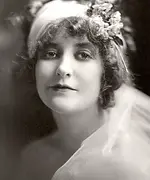
Rhea Mitchell

Robert Edeson

Herschel Mayall
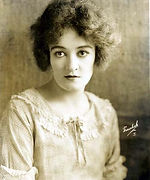
Gladys Brockwell

Shorty Hamilton
On the Night Stage (1915)
Adventure, Drama, Romance, Western
62m
New York Motion Picture Company
Director:
Writer:
C. Gardner Sullivan, Thomas H. Ince

"A Gripping Drama of the Golden West"
The day after completing shooting on The Bargain, his first feature-length movie, William S. Hart was already hard at work on his next feature, On the Night Stage. Reginald Barker once again directed him from a scenario written by C. Gardner Sullivan (for which producer Thomas H. Ince would again claim credit).
Although Ince, sensing Hart’s star potential, made the actor integral to promoting the movie, he received only fourth billing. Noted stage actor Robert Edeson headed the cast, with leading lady Rhea Mitchell and Hershel Mayall also billed above Hart. Edeson had established himself as a dependable leading man on Broadway before receiving his big break in movies in Cecil B. DeMille’s The Call of the North in 1914. A report in Mutual’s Reel Life magazine disclosed that Edeson provided the bearskin that features in the background of some of the film’s dance hall scenes – a trophy, so the report claimed, of a hunting trip in the Rockies. The same magazine also claimed that Hart’s father gave him the buckskin vest he wore in 1890, and that he had worn it while playing the part of Cash Hawkins in the stage production of The Squaw Man.
Rhea Mitchell had made her way into movies via repertory work and had already appeared opposite Hart in three shorts. On the Night Stage was her first appearance in a feature. Hershel Mayall had also carved a career for himself in movies after a long career with stock and touring theatrical companies. It was his performance as Handsome Jack Malone in On the Night Stage that inspired future silent heartthrob John Gilbert to become an actor. Mayall had been in the same stock company as Gilbert’s mother. The last time Gilbert had seen Mayall, the actor had been propping up the bar of a saloon near the Olympia Theater in Cincinnati in 1910. Five years later, there was Herschel propping up another bar, this time in character as the villain of the piece. “Either he held his liquor extremely well,” Gilbert later recalled, “or it was a very long time between drinks.” If Hershel Mayall could make it as a movie actor, the eighteen-year-old Gilbert decided, so could he.
Other members of the cast included Tom Chatterton, who directed Hart in his first shorts for the New York Motion Picture Company, now relegated to the uncredited role of stagecoach driver, and Shorty Hamilton in another uncredited part as a cowboy. Hamilton, a former stage comedian, featured in several comic western shorts for Ince.


Robert Edeson and William S. Hart in Reginald Barker's On the Night Stage (1915)
The five-reel film’s shooting schedule lasted twenty-eight days (6th August – 2nd September 1914). Hart once again played a bad man who turns good for the love of a woman. Religion comes to the Old West town of Dead Tree in the form of ‘sky pilot’ Alexander Austin (Edeson). His first convert is saloon girl Belle Shields (Mitchell), the girl whom Texas Smith (Hart) plans to marry. When patrons of Nevada Ned’s dance hall rib Texas about the reverend stealing his girl, an almighty fight breaks out. Seeing Texas outnumbered, Austin fights alongside him. This selfless act expels Tex’s resentment of the newcomer, and they become friends. Belle and the reverend wed, but after the reformed saloon girl revisits an old haunt while visiting a friend, she is blackmailed by Handsome Jack Malone, the shark who stole a kiss after trying to ply her with drink.
After introducing each lead player to the audience as though they were taking a bow on stage (Hart, in a dinner suit, bows like a doll whose batteries are running down) the film follows a plot that would become familiar to audiences over the coming decade. The bad man redeemed by a good woman is complicated by the fact that Hart doesn’t win her love as a result. In fact, On the Night Stage fades out with Texas hugging his horse Midnight’s head and sadly proclaiming, “I ain’t got nobody but you, Midnight, nobody at all.”
The leaden pace prevents On the Night Stage from being one of Hart’s better pictures, but certain moments stand out. William Farnum and Tom Santschi’s gruelling encounter in the previous year’s The Spoilers surely inspired the mass brawl which cements Texas and Austin’s friendship. Many at the time felt it even surpassed that bout, with Al Ray placing it top of the greatest screen fights of all time in Picture Play Weekly (The Spoilers came second). Near the film’s end, Texas steers Malone out of town, presumably to execute him, and Barker shoots the two men on a mountain ridge near Inceville, their figures outlined against the vivid white sky while Midnight bumps the reluctant Malone forward.
On the Night Stage provided Ince with another hit, thanks to Hart. Critics and the public both liked the film. Moving Picture World considered it an “excellent five-reel number of the Mutual Masterpieces,” although it was not so complimentary about Hart’s performance, stating that “A more red-blooded, devil-may-care type might have made a stronger impression.” That critic was in the minority, with most praising Hart. The New York Dramatic Mirror said, “Mr. Hart’s is a face that photographs to a nicety. Small wonder, then, that he should be able to monopolize the action for one follows his movements with the fascination that a snake has upon his feathered prey… It is a picture in which the character will persist after the story is forgotten.” Clarence J. Caine, writing in Motography, felt that “William S. Hart’s… character is carefully and consistently drawn and all that he does is natural. In the many scenes taken at close range his facial expression is wonderful and he makes one feel all that is passing through his mind.”
Sources: Reel Life; the Mutual Film Magazine, April 1915; Dark Star: The Untold Story of the Meteoric Rise and Fall of Legendary Silent Screen Star John Gilbert, Leatrice Gilbert Fountain; The Strong, Silent Type, Over 100 Screen Cowboys 1903-1930, Buck Rainey; The Complete Films of William S. Hart: a Pictorial Record, Diane Kaiser Koszarski; William S. Hart: Projecting the American West, Ronald L. Davis; Picture Play Magazine, April 1915; Moving Picture World, 3/4/1915; New York Dramatic Mirror, 1915.