Lillian Gish

Lillian Gish
"I think the things that are necessary in my profession are these: Taste, Talent and Tenacity. I think I have had a little of all three."
Lillian Gish
Birth name:
Lillian Diana Gish
Born:
14th October 1893, Springfield, Ohio, USA
Died:
27th February 1993, New York City, New York, USA
Years active:
1912 - 1987
Lillian Gish was one of the central creative figures of early American cinema, a stage-trained actress whose 75‑year screen career ran from 1912 to 1987 and whose work with D. W. Griffith helped define film acting itself. Celebrated as the “First Lady of the Screen” or “First Lady of American Cinema,” she became an emblem of silent‑era artistry, yet continued to act in sound films, theatre, and television well into old age.
Early life and family background (1893–1911)
Lillian Diana Gish was born on 14 October 1893 in Springfield, Ohio, to James Lee Gish and Mary (née McConnell) Gish. Her father struggled with alcoholism and eventually abandoned the family, forcing her mother to seek work to support Lillian and her younger sister, Dorothy. Mary Gish turned to acting, and the girls quickly became members of travelling theatrical companies, performing in melodramas and one‑night stands across the United States.
By about 1900 the family was based largely in New York. Lillian made her stage debut at around five years old, beginning what would become nearly nine decades as a professional performer. As child actresses, the Gish sisters befriended another young performer, Gladys Smith—soon to be known as Mary Pickford—who would play a key role in Lillian’s move into motion pictures.
Entry into films and collaboration with D. W. Griffith (1912–1921)
In 1912, Mary Pickford introduced Lillian and Dorothy Gish to director D. W. Griffith at the Biograph studio in New York. Griffith was immediately struck by their screen presence and cast them in the short An Unseen Enemy (1912), which marked Lillian’s film debut; she made a dozen films with him that year alone and more than 25 over the next two years.
As part of Griffith’s stock company, Lillian honed a subtle, psychologically detailed style of screen acting—using delicate facial expressions, eye movements, and controlled gestures—that contrasted sharply with stage melodrama. Her fragile appearance and ethereal quality made her ideal for roles of vulnerable but morally resilient heroines, which Griffith used to great effect.
She appeared in many of Griffith’s major features, including:
· The Birth of a Nation (1915), the controversial Civil War epic in which she played Elsie Stoneman, the young Northern woman victimised by the forces of Reconstruction.
· Intolerance (1916), where she contributed as an actress and also worked behind the scenes, though her screen role is relatively small.
· Broken Blossoms (1919), as the abused girl Lucy, often cited as one of her most intense and finely modulated performances.
· Way Down East (1920), in which she played Anna Moore, famously enduring real sub‑zero conditions on cracking ice floes for the climactic rescue sequence.
· Orphans of the Storm (1921), opposite Dorothy Gish, set against the French Revolution.
In this period, Griffith and Gish together helped codify film language and screen acting: critics admired her restrained, interior style, which other actors emulated, and many historians credit her as a pioneer of “modern” film performance.
Directing and independent work; the MGM period (1922–1928)
In 1920 Griffith temporarily left his studio to shoot scenes for two films in Florida and encouraged Gish to direct a film, reportedly telling her that the crew would work harder for a woman. The result was Remodeling Her Husband (1920), starring Dorothy Gish; the film is now believed lost, but it stands as evidence of Lillian’s early involvement in directing and production when female filmmakers were rare. She did not direct again, later remarking that directing was “a man’s job,” a telling reflection of contemporary expectations despite her evident aptitude.
In 1922 Lillian left Griffith and signed with the independent Tiffany company, starring in The White Sister (1923), an adaptation of F. Marion Crawford’s novel. It was both a critical and commercial success, solidifying her status as a leading dramatic actress.
Her career reached another turning point when she signed with the newly formed Metro‑Goldwyn‑Mayer (MGM) in the mid‑1920s. MGM offered an unusually lucrative contract—reported at about $800,000 to $1 million for a series of films—along with significant creative control. Gish had near‑total creative influence on three major silent features:
· La Bohème (1926), directed by King Vidor, in which she played Mimi opposite John Gilbert.
· The Scarlet Letter (1926), an adaptation of Nathaniel Hawthorne’s novel, directed by Victor Sjöström, where she portrayed Hester Prynne.
· The Wind (1928), again directed by Victor Sjöström, a psychological western set in the Texas plains, which Gish later cited as her favourite of her MGM works.
MGM released The Wind just as sound films emerged. It was not a commercial success, but is now regarded as one of the great late silent features and a key showcase of Gish’s artistry.
By 1928, however, with the rise of talkies and new stars such as Greta Garbo, Gish’s position as MGM’s premier leading lady diminished, and her contract with the studio ended.
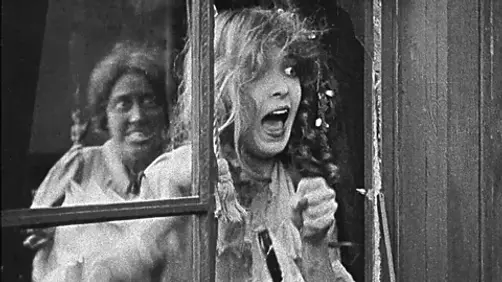
Lillian Gish in D. W. Griffith's The Birth of a Nation (1915)
Transition to sound and return to the stage (1929–1940s)
Gish’s first sound film was One Romantic Night (1930), an adaptation of Ferenc Molnár’s play The Swan. Although she spoke clearly and retained her screen presence, she found the early sound-film environment creatively constraining and focused primarily on the theatre during the 1930s.
On Broadway she played a wide range of classical and modern roles, including Ophelia in Guthrie McClintic’s 1936 Hamlet alongside John Gielgud and Judith Anderson; she later took pride in describing her performance as a “lewd Ophelia,” emphasising that she resisted overly ethereal interpretations. She also appeared as Marguerite in Robert Edmond Jones’s Camille and worked steadily in other drama productions, sustaining her reputation as a serious stage actress.
She returned to film intermittently: in the early 1940s she appeared in Commandos Strike at Dawn (1942) and Top Man (1943), supporting roles that demonstrated her adaptability in contemporary settings.
Character work in the sound era; television and later films (1940s–1980s)
Gish’s most prominent sound‑era film performances include several distinguished supporting or character roles. In Duel in the Sun (1946), a Technicolor western produced by David O. Selznick, she played Laura Belle McCanles, earning an Academy Award nomination for Best Supporting Actress. She appeared in the fantasy romance Portrait of Jennie (1948) and in smaller film roles throughout the period.
Her work in Charles Laughton’s The Night of the Hunter (1955), as Rachel Cooper—the fiercely protective guardian of endangered children—has become one of her most acclaimed performances, embodying moral strength and quiet resolve opposite Robert Mitchum’s sinister preacher. The film’s initial box‑office failure belied its later critical status, and Gish’s role is now often cited as a bridge between silent‑era expressiveness and mid‑century American cinema.
From the 1950s onward, she also embraced television, appearing in anthology dramas and specials that introduced her to new audiences. She continued to act in films such as Robert Altman’s ensemble comedy A Wedding (1978) and the satire Sweet Liberty (1986).
Her final screen role came in The Whales of August (1987), in which she co‑starred with Bette Davis as an elderly woman reflecting on life and memory; at around 93 years old, Gish brought an entire century’s worth of performance experience to the part, and the film was both a modest commercial success and a critical celebration of her legacy.
Writing, advocacy, and public persona
Beyond acting, Gish became an articulate historian and advocate for film as an art form. In 1969 she published her memoir The Movies, Mr. Griffith, and Me, a key primary source on early American cinema and her collaboration with Griffith. She wrote and lectured extensively on silent film, campaigning for preservation and for recognition of its achievements.
She also co‑authored or inspired volumes on her and Dorothy’s careers, such as Dorothy and Lillian Gish, and frequently spoke about the ethics of the film industry, women’s creative contributions, and the need for artistic integrity over commercial expediency.
Throughout her life she carefully curated a dignified public image—poised, disciplined, and devoted to work—but contemporaries also noted her humour, toughness, and capacity for physical endurance, exemplified by the punishing conditions she endured on location in films like Way Down East and The Wind.
Personal life
Gish never married and had no children, devoting herself to her career and to her close relationship with her mother and sister. She and Dorothy remained personally and professionally intertwined, often living together and collaborating on projects until Dorothy’s death in 1968.
Despite an image of delicacy, Lillian lived a long and active life; she continued to appear publicly, lecture, and take part in tributes into her late 90s. She died peacefully in her sleep on 27 February 1993 at her apartment in New York City, aged 99.
Honours and legacy
Lillian Gish’s contribution to film and theatre was widely recognised in her lifetime. In 1971, she received an honorary Academy Award for “superlative artistry and for distinguished contribution to the progress of motion pictures.” In 1984 she became the first actress to receive the American Film Institute’s Life Achievement Award, underscoring her status as the silent era’s preeminent actress and a living link to film’s beginnings. The AFI later ranked her 17th among the greatest female stars of classic Hollywood.
Historians credit her with pioneering screen‑performance techniques—especially the use of minimal gesture, nuanced facial expression, and psychological realism—which helped transition acting from the broadness of stage melodrama to the intimacy demanded by the camera. She is also recognised as one of the earliest women to direct a feature‑length film in Hollywood and as a figure who fought, often quietly, for creative control and artistic standards in an emerging industry dominated by men.
Her screen work from Broken Blossoms (1919) and Way Down East (1920) to The Wind (1928) and The Night of the Hunter (1955), together with her later advocacy for film history, positions Lillian Gish as not just a star of the silent era but as one of the foundational artists of American cinema.
Sources: Mr Griffith, the Movies, and Me, Lillian Gish; Lillian Gish: A Life on Stage and Screen, Stuart Oderman; Lillian Gish: Her Legend, Her Life, Charles Affron.
Lillian Gish Filmography
1912, An Unseen Enemy, 17 min, D. W. Griffith, Biograph Company, Dorothy Gish, Elmer Booth, Robert Harron, Harry Carey. Film debut of Lillian & Dorothy Gish. Short, crime thriller. 1912, Two Daughters of Eve, ~13 min, D. W. Griffith, Biograph Company, Henry B. Walthall, Claire McDowell. Uncredited. 1912, So Near, Yet So Far, ~14 min, D. W. Griffith, Biograph Company, Walter Miller, Mary Pickford. 1912, In the Aisles of the Wild, ~15 min, D. W. Griffith, Biograph Company, Claire McDowell, William J. Butler. LOST. 1912, The One She Loved, ~14 min, D. W. Griffith, Biograph Company, Henry B. Walthall, Mary Pickford. 1912, The Painted Lady, ~14 min, D. W. Griffith, Biograph Company, Charles Hill Mailes, Blanche Sweet, Uncredited appearance. 1912, The Musketeers of Pig Alley, ~17 min, D. W. Griffith, Biograph Company, Elmer Booth, Robert Harron, Harry Carey. Landmark crime film; often cited as the first gangster film. 1912, Gold and Glitter, ~13 min, D. W. Griffith, Biograph Company, Elmer Booth, Grace Lewis. 1912, My Baby, ~14 min, D. W. Griffith, Biograph Company, Mary Pickford, Henry B. Walthall. 1912, The Informer, ~17 min, D. W. Griffith, Biograph Company, Walter Miller, Henry B. Walthall. 1912, Brutality, ~16 min, D. W. Griffith, Biograph Company, Walter Miller, Mae Marsh. 1912, The New York Hat, ~16 min, D. W. Griffith, Biograph Company, Mary Pickford, Lionel Barrymore, Robert Harron, Screenplay by Anita Loos (her first sold script). 1912, The Burglar's Dilemma, ~15 min, D. W. Griffith, Biograph Company, Lionel Barrymore, Henry B. Walthall. 1912, A Cry for Help, 17 min, D. W. Griffith, Biograph Company, Lionel Barrymore, Walter Miller, LOST. 1913, Oil and Water, ~15 min, D. W. Griffith, Biograph Company, Blanche Sweet, Robert Harron, Uncredited appearance. 1913, The Unwelcome Guest, ~16 min, D. W. Griffith, Biograph Company, Mary Pickford, Lionel Barrymore, Uncredited appearance. 1913, A Misunderstood Boy, ~15 min, D. W. Griffith, Biograph Company, Robert Harron, Mae Marsh. 1913, The Left-Handed Man, ~14 min, D. W. Griffith, Biograph Company, Charles H. West, Harry Carey. 1913, The Lady and the Mouse, ~16 min, D. W. Griffith, Biograph Company, Lionel Barrymore, Dorothy Gish. 1913, The House of Darkness, ~16 min, D. W. Griffith, Biograph Company, Lionel Barrymore, Claire McDowell. 1913, Just Gold, ~15 min, D. W. Griffith, Biograph Company, Lionel Barrymore, Alfred Paget. 1913, A Timely Interception, ~16 min, D. W. Griffith, Biograph Company, Robert Harron, W. Chrystie Miller. 1913, The Mothering Heart, ~18 min, D. W. Griffith, Biograph Company, Walter Miller, Viola Barry. 1913, An Indian's Loyalty, ~17 min, Christy Cabanne, Biograph Company, Frank Opperman, Edward Dillon. LOST. 1913, During the Round-Up, ~17 min, Christy Cabanne, Biograph Company, Frank Opperman, Henry B. Walthall. LOST. 1913, A Woman in the Ultimate, ~15 min, Dell Henderson, Biograph Company, Charles Hill Mailes, Henry B. Walthall, LOST. 1913, A Modest Hero, ~15 min, Dell Henderson, Biograph Company, Walter Miller, Charles H. West, LOST. 1913, So Runs the Way, ~14 min, Christy Cabanne, Biograph Company, James Cooley, Frances Nelson, LOST. 1913, Madonna of the Storm, ~15 min, D. W. Griffith, Biograph Company, Charles Hill Mailes, J. Jiquel Lano., LOST. 1913, The Battle at Elderbush Gulch, ~17 min, D. W. Griffith, Biograph Company, Mae Marsh, Robert Harron, Alfred Paget. Two-reel short. Western action/drama. 1913, The Conscience of Hassan Bey, ~14 min, D. W. Griffith & Christy Cabanne, Biograph Company, William Welsh, Alfred Paget. 1913, The Little Tease, ~14 min, D. W. Griffith, Biograph Company, Mae Marsh, W. Chrystie Miller. LOST. 1914, The Green-Eyed Devil, ~20 min, James Kirkwood Sr. Reliance Film Company, Spottiswoode Aitken, Earle Foxe. LOST. 1914, Judith of Bethulia, 61m, D. W. Griffith, Biograph, Blanche Sweet, Henry B. Walthall. 1914, The Hunchback, ~20 min, Christy Cabanne, Majestic Film Company, F. A. Turner, William Garwood. LOST. 1914, The Battle of the Sexes, ~42 min, D. W. Griffith, Majestic Film Company, Donald Crisp, Robert Harron, Owen Moore, INCOMPLETE — some reels survive. 1914, The Quicksands, ~20 min, Christy Cabanne, Majestic Film Company, Courtenay Foote, Fay Tincher. LOST. 1914 Home, Sweet Home ~65 min, D. W. Griffith, Reliance-Majestic, Henry B. Walthall, Josephine Crowell, Mae Marsh. Anthology feature. Released May 1914. 1914, The Rebellion of Kitty Belle, ~20 min, Christy Cabanne, Majestic Film Company, Robert Harron, Raoul Walsh, LOST. 1914, Lord Chumley, ~50 min, James Kirkwood Sr., Biograph Company, Henry B. Walthall, Charles Hill Mailes. Adapted from the 1888 Belasco play. 1914, The Angel of Contention, ~20 min, John B. O'Brien, Majestic Film Company, Spottiswoode Aitken, George Siegmann. LOST. 1914, Man's Enemy, ~16 min, Frank Powell, Biograph Company, Franklin Ritchie, Vivian Prescott. 1914, The Tear That Burned, ~20 min, John B. O'Brien, Majestic Film Company, Blanche Sweet, Josephine Crowell. LOST. 1914, The Folly of Anne, ~20 min, John B. O'Brien, Majestic Film Company, Elmer Clifton, Jack Conway. LOST. 1914, The Sisters, ~20 min, Christy Cabanne, Majestic Film Company, Dorothy Gish, Elmer Clifton, aka: A Duel for Love. LOST. 1915, The Birth of a Nation, 3h 15m, Elsie Stoneman, D. W. Griffith, D. W. Griffith Corp./Epoch, Henry B. Walthall, Mae Marsh, Miriam Cooper, Ralph Lewis, Highest-grossing silent film. Controversial for depictions of race. 1915, The Lost House, ~20 min, Dosia Dale, Christy Cabanne, Majestic Film Company, Wallace Reid, F. A. Turner. LOST. 1915, Enoch Arden, ~40 min, Christy Cabanne, Majestic Film Company, Alfred Paget, Wallace Reid. Based on the Tennyson poem. Two-part feature. 1915, Captain Macklin, ~55 min, John B. O'Brien, Majestic Film Company, Jack Conway, Spottiswoode Aitken, LOST. 1915 The Lily and the Rose, ~55 min, Paul Powell, Wilfred Lucas, Rozsika Dolly, Triangle Film Corporation. 1916, Daphne and the Pirate, ~55 min, Christy Cabanne, Triangle Film Corporation, Elliott Dexter, Walter Long. LOST. 1916 Sold for Marriage, ~55 min, Christy Cabanne, Triangle Film Corporation, Frank Bennett, Walter Long. 1916 An Innocent Magdalene, ~55 min, Allan Dwan, Triangle Film Corporation, Spottiswoode Aitken, Sam De Grasse. LOST. 1916 Intolerance, 2h 43m, D. W. Griffith, Triangle Film Corporation, Mae Marsh, Robert Harron, Constance Talmadge, Seena Owen. Four interlinked stories. Magnum opus of Griffith. Aka: Intolerance: Love’s Struggle Throughout the Ages. 1916 Diane of the Follies, ~55 min, Christy Cabanne, Triangle Film Corporation, Sam De Grasse, Howard Gaye. LOST. 1916 The Children Pay, ~55 min, Lloyd Ingraham, Fine Arts Film Corporation, Violet Wilkie, Keith Armour. 1916 A House Built Upon Sand, ~55 min, Edward Morrissey, Fine Arts Film Corporation, Roy Stewart, William H. Brown. LOST. 1916, Pathways of Life, ~20 min, Christy Cabanne, Triangle Film Corporation, Spottiswoode Aitken, Olga Grey. 1917, Souls Triumphant, ~55 min, John B. O'Brien, Fine Arts Film Corporation, Wilfred Lucas, Spottiswoode Aitken. LOST. 1918 Hearts of the World, ~2h, D. W. Griffith, Famous Players-Lasky, Robert Harron, Dorothy Gish, Josephine Crowell. WWI drama; filmed partly in England. 1918 The Great Love, ~70 min, D. W. Griffith Famous Players-Lasky, Robert Harron, Henry B. Walthall. LOST. 1918, Lillian Gish in a Liberty Loan Appeal, ~5 min, D. W. Griffith, Artcraft Pictures, WWI propaganda short. LOST. 1918 The Greatest Thing in Life, ~70 min, D. W. Griffith, Famous Players-Lasky, Robert Harron, Adolphe Lestina. LOST. Gish also received story credit (as Dorothy Elizabeth Carter). 1919 A Romance of Happy Valley, 1h 16m, D. W. Griffith, Famous Players-Lasky, Robert Harron, Kate Bruce, George Nichols. 1919 Broken Blossoms, 1h 30m, D. W. Griffith, United Artists, Richard Barthelmess, Donald Crisp, Arthur Howard. Full title: Broken Blossoms or The Yellow Man and the Girl. 1919 True Heart Susie, 1h 27m, D. W. Griffith, Artcraft Pictures, Robert Harron, Loyola O’Connor, Wilbur Higby, Clarine Seymour. 1919 The Greatest Question, ~70 min, D. W. Griffith, First National Pictures, George Fawcett, Eugene Besserer. 1920 Remodeling Her Husband, ~55 min, [DIRECTOR ONLY], Lillian Gish [Director], New Art Film Company, Dorothy Gish, James Rennie. LOST. Only film directed by Gish. Also wrote story (as Dorothy Elizabeth Carter); subtitles by Dorothy Parker. 1920 Way Down East, 2h 25m, D. W. Griffith, United Artists, Richard Barthelmess, Lowell Sherman, Burr McIntosh, Kate Bruce. Famous ice-floe climax caused permanent nerve damage to Gish's fingers. 1921 Orphans of the Storm, 2h 30m, D. W. Griffith, United Artists, Dorothy Gish, Joseph Schildkraut, Creighton Hale, Monte Blue, Lucille La Verne. Set during the French Revolution. Last Griffith film with both Gish sisters. 1923 The White Sister, 2h 23m, Henry King, Metro Pictures / Inspiration, Ronald Colman, Gail Kane, J. Barney Sherry, Charles Lane. First Gish film without Griffith. Shot in Italy. Remade 1933 with Helen Hayes and Clark Gable. 1924 Romola, ~2h, Henry King, Metro-Goldwyn-Mayer, Ronald Colman, Dorothy Gish, William Powell. Based on George Eliot. Shot in Florence. Dorothy Gish played Tessa; William Powell in early role. 1925 Ben-Hur: A Tale of the Christ, 2h 22m, Fred Niblo, Metro-Goldwyn-Mayer, Ramon Novarro, Francis X. Bushman, May McAvoy. Uncredited role as chariot race spectator. 1926 La Bohème, ~1h 35m, King Vidor, Metro-Goldwyn-Mayer, John Gilbert, Renée Adorée, Roy D'Arcy, Edward Everett Horton. Based on the Henri Murger novel. Gish had near-total creative control. Prepared for death scene by refusing liquids for three days. 1926 The Scarlet Letter, ~1h 30m, Victor Sjöström, Metro-Goldwyn-Mayer, Lars Hanson, Karl Dane, Henry B. Walthall. Based on Nathaniel Hawthorne's 1850 novel. Second MGM film with near-total creative control. 1927 Annie Laurie, ~1h 33m, John S. Robertson, Metro-Goldwyn-Mayer, Norman Kerry, Creighton Hale. Set in 17th-Century Scotland. Based on the traditional Scottish ballad. 1927 The Enemy, ~1h 36m, Fred Niblo, Metro-Goldwyn-Mayer, Ralph Forbes, Ralph Emerson. WWI anti-war drama. INCOMPLETE — final reel is lost. 1928 The Wind, ~1h 10m, Victor Sjöström, Metro-Goldwyn-Mayer, Lars Hanson, Montagu Love, Dorothy Cumming. Gish's favourite MGM film. Initially a commercial failure, now a recognised silent masterpiece. 1930 One Romantic Night, 1h 13m, Paul L. Stein, Feature Productions, Rod La Rocque, Conrad Nagel, Marie Dressler. Gish's first sound film. 1933 His Double Life ~1h 08m, Arthur Hopkins & William de Mille, Paramount Pictures, Roland Young, Montagu Love. Based on Arnold Bennett's Buried Alive. 1942 Commandos Strike at Dawn, 1h 38m, John Farrow, Columbia Pictures, Paul Muni, Anna Lee, Cedric Hardwicke. WWII drama. Gish returned to film after a nine-year absence. 1943 Top Man, ~1h 12m, Charles Lamont, Universal Pictures, Donald O’Connor, Susanna Foster, Alt. title: Man of the Family. Musical comedy. 1946 Miss Susie Slagle's, ~1h 28m, John Berry, Paramount Pictures, Sonny Tufts, Veronica Lake, Joan Caulfield. Set at Johns Hopkins Medical School c.1910. 1946 Duel in the Sun, 2h 25m, King Vidor, Vanguard Films/Selznick, Jennifer Jones, Joseph Cotten, Gregory Peck, Walter Huston, Lionel Barrymore. Epic Western. Academy Award nomination — Best Supporting Actress (lost to Anne Baxter). Runtime disputed: IMDb 138 min; Wikipedia 145 min. 1948 Portrait of Jennie, 1h 26m, William Dieterle, Vanguard Films/Selznick, Joseph Cotten, Jennifer Jones, Ethel Barrymore. Fantasy romance. Supporting role. 1955 The Cobweb, 1h 44m, Vincente Minnelli, Metro-Goldwyn-Mayer, Richard Widmark, Lauren Bacall, Charles Boyer, Gloria Grahame. Psychiatric hospital drama. 1955 The Night of the Hunter, 1h 33m, Charles Laughton, United Artists, Robert Mitchum, Shelley Winters, Billy Chapin, James Gleason. Widely considered a masterpiece; the only film Laughton directed. 1958 Orders to Kill, 1h 47m, Anthony Asquith, British Lion Films, Paul Massie, Irene Worth, Eddie Albert. British WWII spy thriller. BAFTA nominated film. 1960 The Unforgiven, 2h 05m, John Huston, United Artists, Burt Lancaster, Audrey Hepburn, Audie Murphy, John Saxon. Western drama. 1966 Follow Me, Boys!, 2h 11m, Norman Tokar, Walt Disney Productions, Fred MacMurray, Vera Miles, Elliott Reid. Family film. 1967 Warning Shot, 1h 40m, Buzz Kulik, Paramount Pictures, David Janssen, Ed Begley, Keenan Wynn, Sam Wanamaker. Crime thriller. 1967 The Comedians, 2h 30m, Peter Glenville, Metro-Goldwyn-Mayer, Richard Burton, Elizabeth Taylor, Alec Guinness, Peter Ustinov. Based on Graham Greene novel. Released 1967 (European)/1968 (US wide). Golden Globe nomination — Best Supporting Actress. 1978 A Wedding, 2h 05m, Robert Altman, Lion's Gate Films, Carol Burnett, Mia Farrow, Desi Arnaz Jr. Ensemble comedy-drama. 1983 Hambone and Hillie, ~1h 30m, Roy Watts, Adams Apple Film Company, Timothy Bottoms, Candy Clark, O.J. Simpson. Family adventure. 1986 Sweet Liberty, 1h 47m, Alan Alda, Universal Pictures, Alan Alda, Michael Caine, Michelle Pfeiffer, Bob Hoskins. Comedy. 1987 The Whales of August, 1h 30m, Lindsay Anderson, Nelson Entertainment, Bette Davis, Vincent Price, Ann Sothern, Harry Carey Jr., Mary Steenburgen. Final film. Gish aged 93. National Board of Review — Best Actress. 10-minute standing ovation at Cannes.The Birth of a Nation (1915)