Where Are My Children? (1916)
released 10th April 1916
Cast:

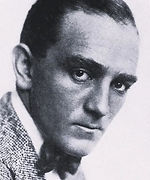
Tyrone Power Sr

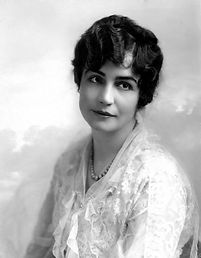
Helen Riaume

Marie Walcamp

Cora Drew

Rena Rogers
A. D. Blake
Where Are My Children? (1916)
Drama
64m
Universal
Director:
Writer:
Lois Weber, Lucy Payton, Franklyn Hall

"A Smashing Daring Subject Done in a Smashing Daring Way"
Lois Weber left Universal Studios in 1914 because of founder Carl Laemmle’s reluctance to move into feature film production. Although the studio’s exploitative feature Traffic in Souls (1913) had been a major box office attraction, Laemmle argued in Universal Weekly that the studio could supply theatres with a week’s worth of programming for less than double they charged for one day’s rental of a feature. Laemmle’s discouraging observation must have come as a blow to Weber, who, with her husband and frequent collaborator Phillips Smalley, had just directed the four-reel Merchant of Venice (1914) for the studio and was keen to work further in a longer format. When the studio then handed directing duties of The Opened Shutters (1914), a planned four-reel feature written by Weber, to Otis Turner, the couple moved on.
They accepted an offer from Bosworth Inc., a small, independent production company founded by the stage and screen actor Hobart Bosworth. Weber and Smalley joined on 1st August 1914, on a contract that promised $500 per week and a percentage of the profits from their movies. Perhaps of more importance to them, except for their first film, every movie they made for the studio was a feature. Bosworth’s greater commitment to quality over quantity allowed Weber to explore the social issues that would feature in the films she made upon her return to Universal. Sunshine Molly (1915) tackled sexual violence against women, while in Hypocrites (1915), she examined the subject of religious hypocrisy. All six of the features she and Smalley made for Bosworth were well-received, but it must have rankled Weber that too often critics and reviewers assumed her husband to be the dominant talent of the partnership when the opposite was very likely true.
By the spring of 1915, Laemmle wanted Weber and Smalley back with Universal. They were happy to return, possibly because Bosworth had fallen under the control of Adolph Zukor, who, historian Anthony Slide speculates in Lois Weber—The Director Who Lost Her Way in History, may have sought to restrict Weber’s creative freedom. In April 1915, while Laemmle was in Los Angeles to open Universal City, they signed a deal. “Lois Weber,” the studio chief declared, “is one of the brightest minds I have ever come in contact with.”
Universal trumpeted the couple’s return in full-page advertisements in trade papers, and released their films under first the Broadway and then the Red Feather banner—both brands of Universal’s most prestigious productions. By then, Weber peers acknowledged her as a talent to rank alongside Griffith, De Mille and Ince, and became the only woman ever to be admitted to the Motion Picture Directors Association.
Where Are My Children? was the first of two feature films about birth control that Weber made in quick succession (the second was the following year’s The Hand That Rocks the Cradle). Contraception had been a contentious topic since the passing of the Comstock Act of 1873, which effectively criminalised birth control in the United States. Birth control campaigner Margaret Sanger re-ignited the debate when she violated the act by posting issues of her pro-contraception monthly newsletter, The Woman Rebel. Following her arrest, Sanger fled to Canada and then to England. In 1915, sensing growing support for birth control in the United States, she returned to face trial. Amid concerns Sanger intended to turn the trial into a public forum on contraception, the prosecutor dropped the charges against her.
It was a subject Weber found irresistible, for, as she told Universal Weekly, “I’ll tell you just what I’d like to be, and that is the editorial page of the Universal Company. My close study of the editorial page has taught me that it speaks with stentorian tones and that its effect is far reached upon thousands of readers…I feel that…I can…also deliver a message to the world.”
The film's title when shooting began was The Illborn. While Weber and Sanger shared the same opinion on birth control, their perspectives were notably different. Sanger preached from a feminist viewpoint, Weber from a political one. As well as the film’s plot, its final title, Where Are My Children?, illustrated her belief in the sacred importance of the family.
While, in an era of suffragette activism, society might have found Weber’s perspective less troublesome, Universal sought to deflect censorship issues with an opening title card that read, “The question of birth control is now being generally discussed. All intelligent people know that birth control is a subject of serious public interest. Newspapers, magazines, and books have treated different phases of this question. Can a subject thus dealt with on the printed page be denied careful dramatization on the motion picture screen? The Universal Film Mfg. Company believes not.
“The Universal Film Mfg. Company does believe, however, that the question of birth control should not be presented before children. In producing this picture the intention is to place a serious drama before adult audiences, to whom no suggestion of fact of which they are ignorant is conveyed. It believes that children should not be admitted to see this picture unaccompanied by adults, but if you bring them it will do them an immeasurable amount of good.”
The ploy worked to some extent. Weber’s film still encountered problems with censors, but on a much smaller scale than Sanger’s own film on the subject, Birth Control (aka New World), a docudrama released the following year. Even when the National Board of Review passed Sanger’s film, many theatre owners refused to exhibit it.
Because newspapers and magazines had widely discussed the subject of contraception, the film proved a thorny problem for William D. McGuire, the Board’s executive secretary. Just a year earlier, the U.S. Supreme Court had ruled that motion pictures could not receive protection under the First Amendment and were therefore not protected by a guarantee of free speech, a protection that was offered to newspapers and magazines. The Board initially passed the film without demanding any changes. However, after arranging a private screening for social reformers and vice crusaders, it reversed its decision, citing medical misinformation. While stressing that its decision had nothing to do with the film’s subject, the Board stated that it also felt the film sent mixed messages regarding contraception and abortion.

Tyrone Power Sr. and Helen Riaume in Lois Weber's Where Are My children?
Despite the Board’s rejection, Universal organised two private screenings. It then continued to exhibit the film four times a day at the Globe Theatre on Broadway while running adverts in New York’s daily newspapers in which it claimed the film had been endorsed by ‘press, public and clergy.’ Public interest only grew when the press reported that ‘nervous feminine spectators’ had fainted during a scene in which a character dies from a botched abortion. Soon, disappointed patrons were being turned away from sold-out screenings. The studio’s hope was that the pressure of public opinion might persuade the Board to once again reverse its decision.
The film’s plot revolves around District Attorney Richard Walton (Tyrone Power Sr.), whose daily contact with hardened criminals has made him a staunch advocate of eugenics to end crime. His own marriage is childless, a situation that grieves Walton. He dotes on his little niece, the product of a ‘eugenic marriage.’
Although Walton secretly supports a slum doctor charged with sending material promoting birth control through the postal system, his position as D.A. means he must prosecute.
Walton doesn’t realise that his own socialite wife, Edith (Helen Riaume), has previously had an abortion. Her reasons were purely selfish, however, as she didn’t want a child to interfere with her social life. When her friend falls pregnant, Mrs Walton has no hesitation in recommending her own abortionist, a Dr Malfit (Juan de la Cruz).
Later, Edith’s younger brother, Roger (A. D. Blake), comes to stay and impregnates the housekeeper’s daughter, Lillian (Rena Rogers). The innocent girl is taken to Dr. Malfit, but the abortion goes wrong and Lillian dies after Roger abandons her…
Many reviewers of the time noted that the film’s argument in favour of birth control for impoverished women while condemning wealthier women for not bettering humanity opposed the common methods of family planning in 1916. Back then, poor women with no access to birth control resorted to illegal ‘back-street’ abortions, while privileged women received tacit help from the medical establishment for family planning.
However, they found the film’s message confusing. Variety complained that, “It starts off seemingly as an argument in favor of birth control and suddenly switches to an argument against abortion.”
Weber argued the censors had forced changes that weakened her original message, then argued that narrative demands meant compromising a propagandistic message. “The propagandist who recognizes the moving picture as a powerful means of putting out a creed,” she argued, “never seems to have any conception of the fact that an idea has to come to terms with the dramatic if it is to be successful screen drama.”
Despite these complaints of ‘confusing’ and ‘mixed’ messages, Where Are My Children? enjoyed enormous success when Universal released it nationally. Only the Pennsylvania State Board of Censors banned it, complaining that it “visualizes in revolting detail the subject of ‘Birth Control.’” In many areas, it broke box office records. 24,000 people saw the film in its first week in Albany, New York. In Boston, a city whose inhabitants were usually subject to strict censorship rulings, 2,000 people were reported to have been turned away on its opening night.
Today, Weber’s film stands as a prime example of Progressive Era filmmaking, using narrative cinema to illustrate complex social issues. More than simply sensationalising topical issues, Weber sought to stimulate public debate in the hope of bringing about social reform.
Sources: Lois Weber in Early Hollywood, Shelley Stamp; Lois Weber—The Director Who Lost Her Way in History, Anthony Slide; The Loud Silents: Origins of the Social Problem Film, Kay Sloan.
Where Are My Children (1916): related content

Explore Universal's early feature Traffic in Souls (1913)

Explore Lois Weber's groundbreaking 1913 thriller, Suspense.