Adolph Zukor
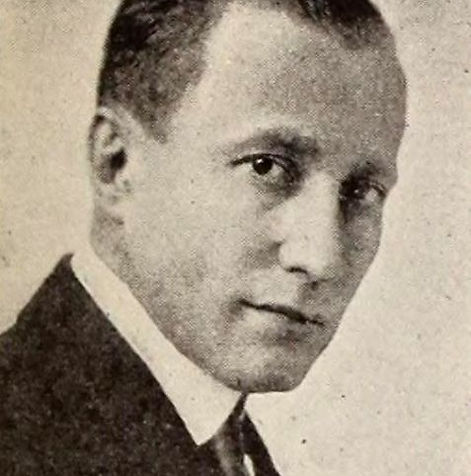
Adolph Zukor in 1921
"Those of us who became film producers hailed from all sorts of occupations—furriers, magicians, butchers, boilermakers... yet one thing is certain: every man who succeeded was a born showman."
Adolph Zukor
Birth name:
Czukor Adolf
Born:
7th January, 1873, Ricse, Hungary
Died:
10th June 1976, Los Angeles, California, USA
Years active:
1903 - 1942
Early life
Like most of his contemporaries, Adolph Zukor came from a humble background. He was born Czukor Adolf in the village of Ricse, Hungary on January 7th, 1873. Both of his parents died before he was eight, and he and his brother Arthur were raised by their uncle, Kalman Liebermann, who expected his nephews to follow in his footsteps and become rabbis. However, feeling he had no future in Hungary after three years working in a store in the hamlet of Szanto, sixteen-year-old Adolph emigrated to the United States, arriving on board the S.S. Rugia with just $40 sewn into his vest.
Shortly after arriving, Zukor found work as an apprentice in a fur shop at $4 a week. In the evenings, he attended night school. After learning the fur trade, he moved to Chicago, where he went into business for himself, selling fur scarves. In 1893, he established the Zukor Novelty Fur Company. One man he traded with was a fellow Hungarian immigrant named Morris Kohn. The couple entered into a business partnership as furriers, and in January 1897, Zukor married Kohn’s niece, Lottie Kaufman. Zukor moved back to New York in 1900, where he lived opposite a friend named Marcus Loew, another future influential figure in early American cinema.
Entering the movie business
Zukor was already a successful entrepreneur, running a business with 25 employees when he entered the movie business. His cousin, Max Goldstein, wanted to open a penny arcade on 14th Street in New York and furnish it with kinetoscopes and phonograph machines. Zukor and Kohn agreed to lend Goldstein and his two partners the money to start the business. It was an immediate success, bringing in between five hundred and seven hundred dollars a day, according to Zukor. After opening further branches in Newark, Philadelphia, and Boston, he and Kohn left the fur business to devote their full attention to this booming new industry.
When moving pictures escaped the confines of the Kinetoscope and leapt onto the screen, Zukor converted the floor above the 14th Street arcade into a nickelodeon he named the Crystal Hall. By 1910, he owned a string of nickelodeons and vaudeville houses, many in partnership with Marcus Loew, and valued his worth at approximately $400,000.
He disagreed with the common perception within the industry that audiences would not sit through a film that lasted longer than a reel, and imported a foreign three-reel Passion Play which he screened at a theatre in Newark. Encouraged by the response, in 1912 he paid $40,000 for the North American rights to French producer Louis Mercanton’s four-reel version of Queen Elizabeth, starring the celebrated stage actress Sarah Bernhardt.
Famous Players
To raise the money for Mercanton’s film, Zukor sold part of his stock in the business he co-owned with Marcus Loew, and started his own business, which he named Famous Players Film Company. The company’s slogan was “Famous Players in Famous Plays,” and following the success of Queen Elizabeth, Zukor obtained the financial backing of theatrical impresario Daniel Frohman to enable him to adapt further stage plays for the screen. Unable to secure the services of D. W. Griffith, he engaged Edwin S. Porter to direct.

Famous Players’ next picture was The Prisoner of Zenda (1913), directed by Porter and starring stage actor James K. Hackett. Zukor rented the top two floors at the old Ninth Regiment Armory at 213-227 West Twenty-Sixth Street and converted them into a studio. The film was a hit, and Zukor followed it with a succession of films featuring noted stage actors. Minnie Maddern Fiske starred in Tess of the D’Urbervilles (1913), James Neill played The Count of Monte Cristo (1913), and Lily Langtry starred in His Neighbor’s Wife (1913).
While recruiting established stars of the stage seemed like a good idea, Zukor soon realised its one major flaw. Sarah Bernhardt was in her seventies; at 48, Fiske was three times the age of the character she was playing; and Hackett’s face bore the wounds of years of heavy drinking. They could get away with playing their characters on stage, but the camera was unforgiving; it showed every line and wrinkle.
His next signing proved to be a lucrative solution to the problem. Zukor had seen nineteen-year-old Mary Pickford on the stage in David Belasco’s A Good Little Devil. She was also already an established star of the screen. Belasco was amenable to releasing Pickford to repeat her stage role in a movie, but insisted on ‘assisting’ director J. Searle Dawley. A Good Little Devil (1914) was static even by the primitive standards of an art form not yet fully developed, and the film did not do well. However, other films, such as Tess of the Storm Country (1914) and Cinderella (1914) which Pickford made for Zukor during her spell with Famous Players, were enormously successful. Pickford’s dominance at the box office allowed Zukor to introduce the concept of block-booking, whereby in order to get one of her films, an exhibitor would have to buy several lesser films they didn’t want.
In the summer of 1916, Famous Players merged with the Jesse L. Lasky Feature Play Company, with Zukor as president and Lasky as vice-president of the new company, which they called Famous Players-Lasky. Cecil B. DeMille became director-general, Sam Goldfish was chairman of the board, and Paramount Pictures distributed its films. Lasky and Zukor first met when they lunched together after Zukor sent a telegram of congratulations upon seeing The Squaw Man (1914). At that lunch, the two men realised they shared many beliefs about the industry's future and of feature films. The merger was possibly also Zukor’s way of solving problem of Harry Aitken and his Triangle film company; backed by a Wall Street bank, Triangle had released The Birth of a Nation in 1915, and threatened to become the dominant force in the industry—a position that Zukor coveted for himself.
Both Zukor’s and Lasky’s companies had been in an agreement with Paramount concerning the distribution of pictures. Zukor, a tougher and more ambitious man than Lasky, had refused to enter the agreement until he received ten per cent shares in Paramount. W. W. Hodkinson, Paramount’s founder, suspected Zukor was out to gain control of his company, but believed he and the company’s other shareholders could keep him in check. It was a fatal misjudgment: by 1917, Hodkinson was out of Paramount, after Zukor persuaded his fellow shareholders to vote against the founder.

Adolph Zukor
Having consolidated its production base and assembled a roster of stars that included, at various times, Roscoe ‘Fatty’ Arbuckle, John Barrymore, Marguerite Clark, Douglas Fairbanks, Pauline Frederick, Thomas Meighan, Wallace Reid, Gloria Swanson, and Rudolph Valentino, Zukor focused on strengthening the company’s exhibition arm by purchasing 135 theatres across the southern states. Under Zukor’s control, the studio eventually acquired nearly 2,000 screens. Famous Players-Lasky now controlled all phases of the production, distribution, and exhibition of films, and the 1920s saw it become one of Hollywood’s leading studios.
The 1920s began well for Zukor with George Melford’s The Sheik unexpectedly becoming a major box-office hit thanks to Rudolph Valentino’s smouldering performance. Ironically, both Lasky and Zukor agreed it was the worst film they had ever seen. But things turned sour after that, with Paramount linked to every high-profile scandal that rocked Hollywood in the early part of the decade. When police arrested Roscoe Arbuckle for the manslaughter of Virginia Rappe, the studio had half-a-million dollars tied up in his films, and had to write off any profits they would have made. Mary Miles Minter, whom Zukor had signed to replace Mary Pickford, became enmeshed in the investigation into the murder of Paramount director William Desmond Taylor, and Wallace Reid, another Paramount player, died of influenza while trying to beat his morphine addiction in a Los Angeles asylum. Fortunately, the release of The Covered Wagon (1923), one of the big earners of the 1920s, steadied the ship.
The depression era and beyond
However, as the ‘20s drew to a close, Paramount was slower than its rivals to embrace talking pictures and suffered most following the stock market crash of 1929 and the subsequent depression. From a profit of $18,381,178 in 1930, the studio slumped to a loss of $15,857,544 in 1932. The studio released Clara Bow, one of its biggest stars, when damaging details of her lurid private life came to light, and rush-released her last two films at a loss. Lasky’s signing of the Russian director Sergei Eisenstein proved to be an expensive blunder that yielded nothing. Most damaging of all, Zukor had purchased the studios theaters with stock that it promised to repurchase at no less than $85, but the stock’s value had plummeted to $7, meaning the studio lost $78 on each share. He sold Paramount’s shares in Columbia Broadcasting Company for $5.2 million in a futile attempt to stem the constant draining of the studio’s coffers and dropped five thousand no-contract employees while urging those with contracts to accept pay cuts.
Only the intervention of Sam Katz, head of Paramount-Publix’s theatre division, and his team of financiers turned things around. Katz forced resignations from many on the Paramount board, and replaced deposed members with his own people. Then, on 30th April 1932, John Hertz, one of Katz’s financiers, informed Jesse Lasky that he no longer had a position at the studio he co-founded.
Somehow, Zukor evaded the axe and was named as one of three court-appointed receivers tasked with steering the company to the reorganisation required under bankruptcy laws. There is little doubt that his method of acquiring theatres was at the root of the studio’s perilous woes, yet the court decided that his associates were to blame. His salary was cut to $23,000 a year for a while, and he was ordered to repay exorbitant bonuses he had received as the studio floundered. But once the reorganisation was completed, he was installed as chairman of the board at an annual salary of $156,000.
The studio came out of bankruptcy in 1934, after Zukor, his son Eugene, Jesse Lasky and others returned $2,125,000 in bonuses they had received in 1929. Zukor stayed on as chairman of the board, but over time his role became an advisory one. In 1964 he assumed the role of Chairman Emeritus, a position he held until his death on June 10th, 1976, at the age of 103.
Sources: The Public is Never Wrong, Adolph Zukor; Paramount Pictures and the People Who Made Them, I. G. Edmonds; The Moguls: Hollywood’s Merchants of Myth, Norman Zierold
Adolph Zukor Filmography
(selected titles)
Queen Elizabeth (1912)
The Prisoner of Zenda (1913); The Count of Monte Cristo (1913); Caprice (1913).
Tess of the Storm Country (1914); Hearts Adrift (1914); In the Bishop’s Carriage (1914)
The Eternal City (1915); The Incorrigible Dukane (1915)