Madame Butterfly (1915)
released 15th November 1915
Cast:

Mary Pickford
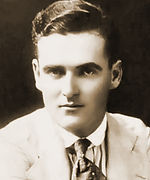
Marshall Neilan

Olive West
Jane Hall
Lawrence Wood
Caroline Harris
Madame Butterfly (1915)
Drama
61m
Famous Players Film Company
Director:
Writer:
John Luther Long

"Mary Pickford in a picturization of John Luther Long's famous classic"
Of the eight Mary Pickford features released in 1915, Madame Butterfly has probably aged the worst. Highly praised on its release, its pace feels sluggish to modern-day audiences. The film formed part of Adolph Zukor’s strategy to increase her global appeal by casting her as women from different nations. She played a French Peasant in Fanchon the Cricket (1915); in Little Pal (1915) she was an Inuit girl; in Poor Little Peppina (1916), the Mafia kidnapped her and shipped her out to Italy; she was a Dutch immigrant in Hulda from Holland (1916) and an orphaned waif on the streets of India in Less than the Dust (1916). While Zukor ensured all were made to Famous Players’ high standards, none rank among Pickford’s best work (she would often refer to Less than the Dust as Cheaper than Dirt…).
In January 1915, Moving Picture World reported that David Belasco might travel west “to supervise the filming of one of his plays, probably ‘Madame Butterfly.’” The film was presumably to be based on Belasco’s one-act play, Madame Butterfly: A Tragedy of Japan, which played for just 24 performances at Herald Square Theatre in March 1900. Lasky’s version appears never to have reached the screen. In November 1915, Daniel Frohman stated in the same publication that Belasco’s play was not the source for the Famous Players version. The AFI website suggests that Frohman’s statement may have resulted from an agreement between him and Lasky that Famous Players make certain alterations to their version. Such an agreement would explain why contemporaneous reviews of the film refer to different endings. Moving Picture World described an ending in which Cho-Cho San commits ritual suicide, whereas Motion Picture Review described one where she “seeks oblivion in the still waters of a Japanese lake.” Belasco apparently introduced the ritual suicide in his play, which Puccini used as the basis for his opera. Although Frohman’s statement claims Famous Players’ film is based on John Luther Long’s short story, both endings differ from that version, in which Cho Cho San simply disappears from her mountain cabin with her baby.
To direct Madame Butterfly, Famous Players chose Sidney Olcott, director of the Kalem Company’s groundbreaking From the Manger to the Cross (1912). Olcott left Kalem soon after the religious epic’s premiere, angered by the studio’s refusal to include credits on the film. He signed with Gene Gauntier’s Featured Players Company. Gauntier, Olcott’s compatriot at Kalem for five years and the scriptwriter on From the Manger to the Cross, started her company after leaving Kalem for the same reason as the director. Their collaboration was brief; Olcott resigned from Gauntier’s Company in early 1914 for reasons unknown and started his own company, Sid Olcott International Features. He signed for Famous Players in April 1915. Madame Butterfly was to be his third film for the studio after The Moth and the Flame (1915) and The Seven Sisters (1915).
To recreate Pinkerton’s rented house in the Nagasaki hills, Olcott obtained permission to film in the Japanese gardens of the Charles Pfizer estate in Bernardsville, New Jersey, and P. D. Saklatvala’s Golestan Japanese Gardens in Plainfield. In his review for Moving Picture World, George Blaisdell praised “the extensive Japanese gardens—miniature lakes, walks, diminutive trees, buildings, jinrikishas, the man-drawn vehicles; boats, and flowers.”
The director also hired members of New York’s Japanese community to oversee the purchasing of costumes and property. Motion Picture News reported that Pickford hired a “Japanese companion, that she may familiarize herself with every mannerism and feature of Japanese as a preliminary to undertaking the life role of the little Geisha girl.”
Sadly, Pickford and Olcott’s first collaboration was not a happy one. “I didn’t like him,” Pickford told historian Kevin Brownlow. “I should never have used him…my brother called him Old Flat-Tire. He was a little bit lame, and my brother disliked him because he was mean to me. I didn’t rate him highly as a director.”
The star and director disagreed on how the role of Cho-Cho San should be played: Olcott demanded Japanese reserve, while Pickford wished to add an American slant to her depiction. Pickford remembered a “furious quarrel which ended in Olcott stalking off the set. I was shaking with anger…”


Mary Pickford and Marshall Neilan in Sidney Olcott's Madame Butterfly (1915)
Pickford called an impromptu meeting on-set and proposed that she would take over directing with the help of her co-star, Marshall Neilan. Olcott, who had been lurking on the set, stepped forward. “He assured me that no one but Sidney Olcott would ever direct any scenes for Madame Butterfly,” Pickford remembered. “Then it was my turn to walk off set.”
Neilan, who would direct Pickford in several films, also found working for Olcott an unhappy experience. Together, he and Pickford would try to dream up ways of livening up the movie. Neilan suggested to Olcott, for instance, that Pinkerton, Cho-Cho San’s American lover, should teach her to play baseball, but he rejected the proposal. According to Brownlow, the only shot that retains a hint of Neilan and Pickford’s collaboration was one in which Ch-Cho San giggles while preparing a “knockout cocktail” to see off an unwanted admirer. Pickford loved Neilan’s baseball idea, and told Sam Goldwyn, “Do you know you ought to make Mickey Neilan a director? He’d be worth at least a hundred and twenty-five dollars a week to you.”
Jesse Lasky recalled Pickford made up to look even more Japanese than Olcott desired. She would dye her hair with three buckets of mascara each morning and wash it out each night. “Mary’s forehead was wide,” Lasky said, “and she fastened the skin of the outer corners of each eye back and achieved the long and slant eyes of the Oriental. The director finally got her to agree to a make-up somewhere nearer the Caucasian.”
The familiar plot sees innocent Japanese maiden Cho-Cho San (Pickford) falling for dashing young American naval lieutenant Pinkerton (Neilan). On the advice of a friend, Pinkerton takes Cho-Cho San for his wife, always intending to return to America to wed his fiancée, Adelaide (Jane Hall). When he is recalled to the States, Pinkerton promises the devoted Cho-Cho San he will return ‘before the robin’s nest again,’ but when he does it is with his American bride. Unknown to him, Cho-Cho San has given birth to their son during his absence…
Despite the praise lavished upon it, Olcott’s direction feels outdated when compared to other works of the era. He does cross-cut between Lieutenant Pinkerton’s wedding in America and Cho-Cho San’s rejection of a wealthy would-be suitor to illustrate their moral disparity, but otherwise his techniques seemed mired in the past. He rarely uses close-ups, even for the most emotionally charged moments, and his intertitles merely describe what we are about to see. Pickford successfully immerses herself in the tragic figure of Cho-Cho San, dispelling all notions of the Girl with the Curls, but Neilan is anonymous and together they are unable to create the chemistry that is vital if the tale is to resonate with the audience.
Calling the film “finely acted, splendidly staged and beautifully photographed,” Blaisdell’s review praised Pickford’s strong performance, which, he wrote, showed “deftness and sympathy.” While noting that the part of Cho-Cho San was a departure from her normal roles, Peter Milne of Motion Picture News also approved of her work and, acknowledging Pickford’s immense popularity, reported on “the innumerable throng that crowded the Strand theater… even before the daily papers were given the opportunity to state their opinions of the picture.”
Variety was even more fulsome in its praise - both of Pickford and the picture: “See her play the simple-minder, simpering, giggling little Japanese girl and the transition when she becomes the cast-off of the American lieutenant… watch the gradations of joy and sorrow, her remarkable characterization of an Oriental woman, the perfection in detail of gait, gestures and mannerisms… Words are useless to describe the beauty and artistry of it all – the production, the photography, the uniformly excellent acting of the supporting company and, above all else, Mary Pickford. The Famous Players has never turned out a finer feature – nor indeed has anybody else.”
Among the supporting company mentioned in Variety’s review was unknown eighteen-year-old actress Ruth Gordon, appearing in the second of her three minor screen roles before conquering Broadway.
Sources: Pickford: The Woman Who Made Hollywood, Eileen Whitfield; Mary Pickford, Scott Eyman; Mary Pickford Rediscovered, Kevin Brownlow; The Public Is Never Wrong, Adolph Zukor; AFI website.