Florence Lawrence
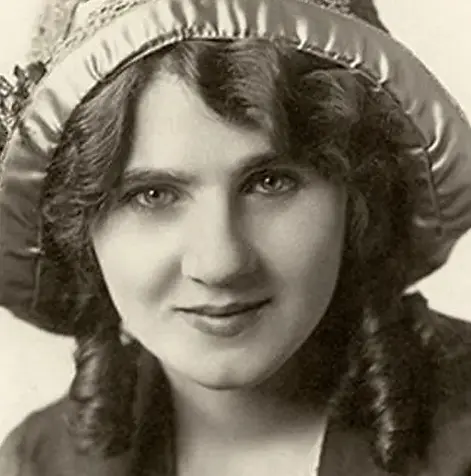
Florence Lawrence
"I used to sit in my dressing room at the studio and wonder just how much longer could I keep making believe."
Florence Lawrence
Birth name:
Florence Annie Bridgewood
Born:
2nd January 1886, Hamilton, Ontario, Canada
Died:
28th December 1938, Beverly Hills, Los Angeles, California, USA
Years active:
1907 - 1938
The importance of Canadian-born actress Florence Lawrence’s role in the history of cinema derives not from her considerable body of work, much of which we have lost, but from the critical part she played in the birth of the star system.
Early Life and stage
She was born Florence Annie Bridgwood in Hamilton, Ontario, on 2nd January 1886, to George, a carriage builder, and Charlotte, an actress who performed as Lotta Lawrence. Her mother was thirty-seven years younger than her father, who had four children from a previous marriage, all of whom were older than his second wife. Charlotte bore George three children, of whom Florence was the youngest.
Florence began appearing on stage with her mother from the age of three, performing song-and-dance routines and a whistling act. Following her father’s death in 1898, Lotta moved the family to live with their grandmother in Buffalo, New York, and enrolled them in school. Immediately after graduating, Florence rejoined her mother on the road.
Unable to find work on the stage in 1906, both mother and daughter found jobs with the Edison Studio, where they debuted together in Daniel Boone (1907), directed by Wallace McCutcheon, with Lotta playing the wife of Boone (William Craven) and Florence playing his daughter. While waiting to return to the stage in The Seminary Girl, Florence also found work as the female lead in J. Stuart Blackton’s The Shaughraun (1907) for Vitagraph. She made several films for Vitagraph, some of which were directed by William Ranous, who became a sort of mentor to the young actress. However, it was another Vitagraph director, Harry Solter, whom Florence would marry on 30th August 1908.
Solter left Vitagraph in early 1908 to work with D. W. Griffith at Biograph. When Griffith needed an actress to replace Marion Leonard, who was touring with a stage show, Florence won the job, probably thanks to Solter’s intervention. Her first role was in a western called The Girl and the Outlaw (1908), and was to be the first of almost 100 films she would make for Biograph in the next two years, many of them under Griffith.

Florence’s frequent appearances on the screen made her familiar to cinema audiences, and reviewers frequently singled her out for praise. However, in the early days of cinema, studios withheld the names of their players to prevent them demanding higher wages, so she became known as the “Biograph Girl.”
The growing popularity of Mary Pickford following her arrival at the studio in the spring of 1909 soon threatened Lawrence’s position as Biograph’s lead actress. Roles that would previously have been awarded to her went to the “Girl with the Golden Curls.” Concerned for her career, Lawrence and Solter approached Essanay hoping to negotiate positions as leading actress for her and as a director for her husband. However, their plan backfired. Essanay was, like Biograph, a member of the Motion Picture Patents Company, and the Trust’s members saw no gain to be made from handing actors the power to switch from one production company to another. They declined the offer and must have informed Biograph executives of it, because the studio fired both Solter and Lawrence and the Trust effectively blacklisted them.
IMP and named stardom.
Carl Laemmle, the diminutive German immigrant and independent distributor who had just started the Independent Moving Picture Company (IMP), was Lawrence’s unlikely saviour. Prevented entry to the MPPC, Laemmle was doing his utmost to discredit the organisation that had denied him. Deciding to make his own films, Laemmle founded IMP and employed both Lawrence and Solter. After building the Laemmle Film Service into America’s biggest distributor in three short years, he understood the importance of publicity and orchestrated a publicity campaign that re-ignited Lawrence’s career and gave birth to the star system.
Rumours—possibly started by Laemmle and his business partner Robert Cochrane—had circulated that the Biograph Girl had died from injuries sustained in a traffic accident. On 12th March 1910, Laemmle published a full-page advertisement refuting the claim with an eye-catching headline that read “We Nail a Lie!” and rebranding the “Biograph Girl” as the “IMP Girl,” it also referred to her as Miss Lawrence. While Laemmle’s ad isn’t necessarily the first example of an actor being named, it is by far the most influential example. Two days later, Lawrence’s name was used to publicise her latest film, The Broken Oath, directed by Solter.
Laemmle arranged a promotional visit to St. Louis for Florence to prove that she was alive and well. In John Drinkwater’s biography of Laemmle, he describes how, “the stars were received at the station by a crowd in a stampede of excitement, and St. Louis became a riot…they demonstrated their affection by tearing the buttons from her coat, the trimmings from her hat, and the hat from her head.” The truth might not have been as dramatic, but newspapers did report that “there were enthusiastic shouts from female voices, and a rush of well-dressed women to get a closer view of the little woman in a close-fitting blue dress…”
Florence and Solter made approximately 50 films for IMP before leaving in September 1910 to join Lubin. The Trust company had been making overtures for some time, and Solter, in a letter to his wife, admitted to feeling the strain of working under Robert Cochrane.
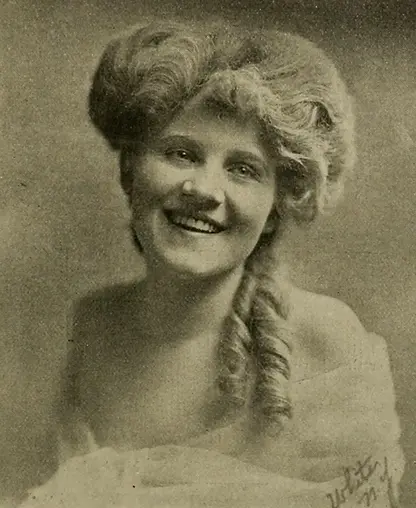
Florence Lawrence
Lubin and Victor
A suit filed by Laemmle for breach of contract delayed Florence’s career with Lubin until 30th January 1911, when it released His Bogus Uncle. In her time with the studio, she made several films opposite Arthur V. Johnson, her former co-star from her Biograph days, most of which were well-received. However, Florence grew restless and declined to renew her contract. Her last film for Lubin, The Surgeon’s Heroism, was released on 8th January 1912, less than a year after her first.
After a vacation in Europe and Egypt, where they socialised with the Kalem company shooting From the Manger to the Cross (1912), Florence and Solter returned to the United States in the spring of 1912. In the late spring or early summer of that year, Lawrence became the second film actress to have her own production company (after Helen Gardner) when they established the Victor Film Company in New York.
Despite the legal wrangle with Carl Laemmle over their departure from IMP, they released their films for Victor through Laemmle’s new company, the Universal Film Manufacturing Company. However, Florence’s mental health, which had never been robust, suffered from receiving lacklustre reviews for some of her independent pictures and, more significantly, from marital problems with Solter, who threatened suicide during a temporary split. In late 1912, she retired from pictures and move to a home in River Vale, New Jersey.
Setback and Return
Her retirement was short-lived, however, and after six months she negotiated a contract with Laemmle to make 26 short films over one year. Her absence from the screen had done little to dim her popularity, and her films were popular with audiences. The quality of her output declined in 1914, however. In March of that year, she suffered a serious back injury while trying to carry actor Matt Moore down a flight of stairs for a scene in The Pawns of Destiny. Her injuries curtailed her career, and she didn’t release a new film between November 1914 and April 1916, although she remained popular thanks to regular re-releases of her older films.
Her comeback film—and first feature—entitled Elusive Isabel, was released on 24th April 1916. In the short time she had been away, however, the industry and the public’s taste had changed. While Lawrence escaped criticism, reviewers were unimpressed with the film, which Variety described as “a third-rate feature.” Humiliated by the poor reviews, Lawrence left Universal amidst stories of a “complicated narrative of friction and internal disturbances.”
To add to her career woes, she and Harry Solter filed for divorce in 1916. Old friends she had worked with slipped away. Arthur V. Johnson, Fred Mace, and Florence LaBadie all died within two years of each other. Perhaps to soften the pain, Lawrence threw herself into working for the Red Cross when the United States entered the Great War. In October 1918, as the war was drawing to a close, she made The Love Craze, a two-reel short for ailing Universal subsidiary Nestor. The film hardly caused a ripple. Lawrence’s time as a major star in the industry was over.
Harry Solter died of a stroke in March 1920. Lawrence, her screen career gone, turned to theatre until signing for the new outfit, Producers Pictures Corporation, managed by George Kern, the former production manager with the Christie Company. This latest comeback faltered when PPC delayed the release of The Unfoldment until January 1922. When it did reach cinema screens, it met with complete indifference, failing even to receive a review. Lawrence made only a handful of further screen appearances in the 1920s, all in supporting roles.
In 1921, Lawrence married Charles Bryne Woodring, an automobile salesman who had received the Croix de Guerre for bravery during the war. Together, they opened Hollywood Cosmetics, a store that sold her own line of cosmetics. The store prospered, but the couple’s marriage floundered, and they separated on 29th December 1929, just a few months after the death of Lawrence’s mother.
Later Life
In the early 1930s, Lawrence started accepting uncredited bit parts in movies. She married again in 1933, this time to a violent alcoholic named Henry Bolton. In February 1934, a drunken Bolton dragged Lawrence from her bed and thrashed her. She left him immediately and filed for divorce.
In 1937, Lawrence developed a condition her doctor described as “a bone disease which causes anemia and depression.” Her mental health deteriorated. On Wednesday, 28th December 1938, Lawrence took her own life by consuming a mixture of cough medicine and ant paste. Her suicide note read, “Call Dr. Wilson. I am tired. Hope this works. Good-by, my darlings. They can’t cure me so let it go at that. Lovingly, Florence. P.S. You’ve all been swell guys. Everything is yours.”
Becoming the screen's first recognisable star didn't protect Florence Lawrence from the same fate that befell so many who followed in her wake. The emergence of the star system created a shift in the public's perception of the new screen idols, but also emphasised the speed with which public taste changes. By the mid-1920s, Lawrence, Hollywood's first shining star, was remembered only by those who had once worked with her.
Sources: Florence Lawrence: The Biograph Girl, Kelly R. Brown; Women Who Made a Difference, Malcolm S. Forbes; The American Movie Industry: The Business of Motion Pictures, Gorham Kindem.
Filmography
(confirmed titles only)
Daniel Boone (1907), The Boy, the Bust and the Bath (1907), Athletic American Girls (1907), The Shaughraun (1907), The Despatch Bearer; or, Through the Enemy's Lines (1907).
Cupid's Realm; or, A Game of Hearts (1908), Romeo and Juliet (1908), Lady Jane's Flight (1908), The Bandit's Waterloo (1908), Salome, or The Dance of the Seven Veils (1908), Betrayed by a Handprint (1908), The Girl and the Outlaw (1908) Behind the Scenes (1908), The Red Girl (1908), The Heart of O'Yama (1908), Where the Breakers Roar (1908), A Smoked Husband (1908), The Stolen Jewels (1908), The Devil (1908), The Zulu's Heart (1908), Father Gets in the Game (1908), The Barbarian Ingomar (1908), The Vaquero's Vow (1908), The Planter's Wife (1908), Romance of a Jewess (1908), The Call of the Wild (1908), Concealing a Burglar (1908), Antony and Cleopatra (1908), After Many Years (1908), The Pirate's Gold (1908), The Taming of the Shrew (1908), The Song of the Shirt (1908), A Woman's Way (1908), The Ingrate (1908), An Awful Moment (1908), The Clubman and the Tramp (1908), Money Mad (1908), The Valet's Wife (1908), The Feud and the Turkey (1908), The Reckoning (1908), The Test of Friendship (1908), The Dancer and the King: A Romantic Story of Spain (1908), The Christmas Burglars (1908), Mr. Jones at the Ball (1908), The Helping Hand (1908).
One Touch of Nature (1909), Mrs. Jones Entertains (1909), The Honor of Thieves (1909), The Sacrifice (1909), Those Boys! (1909), The Criminal Hypnotist (1909), The Fascinating Mrs. Francis (1909), Mr. Jones Has a Card Party (1909), Those Awful Hats (1909), The Cord of Life (1909), The Girls and Daddy (1909), The Brahma Diamond (1909), A Wreath in Time (1909), Tragic Love (1909), The Curtain Pole (1909), His Ward's Love (1909), The Joneses Have Amateur Theatricals (1909), The Politician's Love Story (1909), The Golden Louis (1909), At the Altar (1909), The Prussian Spy (1909), His Wife's Mother (1909), A Fool's Revenge (1909), The Wooden Leg (1909), The Roue's Heart (1909), The Salvation Army Lass (1909), The Lure of the Gown (1909l, I Did It, Mamma (1909), The Deception (1909), And a Little Child Shall Lead Them (1909), The Medicine Bottle (1909), Jones and His New Neighbors (1909), A Drunkard's Reformation (1909), Trying to Get Arrested (1909), The Road to the Heart, (1909), Schneider's Anti-Noise Crusade (1909), The Winning Coat (1909), A Sound Sleeper (1909), Confidence (1909), Lady Helen's Escapade (1909), A Troublesome Satchel (1909), The Drive for a Life (1909), Tis an Ill Wind that Blows No Good (1909), The Eavesdropper (1909), The Note in the Shoe (1909), The French Duel (1909), Jones and the Lady Book Agent (1909), A Baby's Shoe (1909), The Jilt (1909), Resurrection (1909), Two Memories (1909), Eloping with Auntie (1909), What Drink Did (1909), Eradicating Aunty (1909), Her First Biscuits (1909), The Peachbasket Hat (1909), The Way of Man (1909), The Necklace (1909), The Country Doctor (1909), The Cardinal's Conspiracy (1909), Tender Hearts (1909), Sweet and Twenty (1909), Jealousy and the Man (1909), The Slave (1909), The Mended Lute (1909), Mr. Jones' Burglar (1909), Mrs. Jones' Lover (1909), Love's Stratagem (1909), The Forest Ranger's Daughter (1909), Her Generous Way (1909), Lest We Forget (1909), The Awakening of Bess (1909).
The Winning Punch (1910), The Right of Love (1910), The Tide of Fortune (1910), The Coquette's Suitors (1910), Justice in the Far North (1910), The Blind Man's Tact (1910), Jane and the Stranger (1910), The Governor's Pardon (1910), The New Minister (1910), Mother Love (1910), The Broken Oath (1910), The Time-Lock Safe (1910), His Sick Friend (1910), The Stage Note (1910), Transfusion (1910), The Miser's Daughter (1910), His Second Wife (1910), The Rosary (1910), The Maelstrom (1910), The New Shawl (1910), Two Men (1910), The Doctor's Perfidy (1910), The Eternal Triangle (1910), The Nichols on Vacation (1910), A Reno Romance (1910), A Discontented Woman (1910), A Self-Made Hero (1910), A Game for Two (1910), The Call of the Circus (1910), Old Heads and Young Hearts (1910), Bear Ye One Another's Burden (1910), The Irony of Fate (1910), Once Upon a Time (1910), Among the Roses (1910), The Senator's Double (1910), The Taming of Jane (1910), The Widow (1910), The Right Girl (1910), Debt (1910), Pressed Roses (1910), All the World's a Stage (1910), The Count of Montebello (1910), The Call (1910).
His Bogus Uncle (1911), Age Versus Youth (1911), A Show Girl's Stratagem (1911), The Test (1911), Nan's Diplomacy (1911), Vanity and Its Cure (1911), His Friend, the Burglar (1911), The Actress and the Singer (1911), Her Artistic Temperament (1911), Her Child's Honor (1911), The Wife's Awakening (1911), Opportunity and the Man (1911), The Two Fathers (1911), The Hoyden (1911), The Sheriff and the Man (1911), A Fascinating Bachelor (1911), That Awful Brother (1911), Her Humble Ministry (1911), A Good Turn (1911), The State Line (1911), A Game of Deception (1911), The Professor's Ward (1911), Duke De Ribbon Counter (1911), Higgenses Versus Judsons (1911), The Little Rebel (1911), Always a Way (1911), The Snare of Society (1911), During Cherry Time (1911), The Gypsy (1911), Her Two Sons (1911), Through Jealous Eyes (1911), A Rebellious Blossom (1911), Romance of Pond Cove (1911), The Story of Rosie's Rose (1911), The Life Saver (1911), The Matchmaker (1911), The Slavey's Affinity (1911), The Maniac (1911), A Rural Conqueror (1911), One on Reno (1911), Aunt Jane's Legacy (1911), His Chorus Girl Wife (1911), A Blind Deception (1911), A Head for Business (1911), A Girlish Impulse (1911), Art Versus Music (1911).