Civilization (1916)
released 17th April 1916
Cast:

Howard Hickman

Enid Markey

Lola May

Herschel Mayall

George Fisher
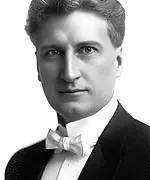
J. Frank Burke
Civilization (1916)
War, Drama
86m
Thomas H. Ince Corporation
Director:
Raymond B. West
Writer:
C. Gardner Sullivan

"A Masterpiece that throws a glaring light on the world's flaunting boast of a higher progress"
In the summer of 1915, Harry and Roy Aitken astounded the movie industry by signing three key players to spearhead their newly formed Triangle Film Corporation. D. W. Griffith, Thomas H. Ince, and Mack Sennett were widely regarded as filmmaking geniuses. By refining and expanding the tools of film language, Griffith had transformed movies into a nascent art form; Ince had standardised movie production while churning out a string of hits, and Sennett was the master of slapstick comedy. Together, they formed a formidable team capable of competing with industry titans Adolph Zukor, Jesse Lasky, and Carl Laemmle. Within one year, however, Triangle was in serious financial peril; rather than spelling the start of a prosperous new era for the Aitkens, its formation marked the beginning of their downfall.
Older brother Harry, the driving force behind their unparalleled success, was continuously performing a financial juggling act. For years he obtained funds for new projects from the proceeds of existing ones. Not only did revenue from one film finance the production of his next, but he often used the mere promise of future revenue to raise funds. That meant the Aitkens were always only one or two flops away from disaster. While enlisting the industry’s greatest talents might have appeared a sound business move, Aitken had also recruited three enormous egos. Ince and Sennett grew jealous of Griffith’s growing prestige following the release of The Birth of a Nation, which the Aitkens had helped finance. Soon, they were pushing to make a ‘super-picture’ of their own. As the Aitkens were financing Griffith’s latest epic, Intolerance (1916), they felt obliged to provide support for Ince and Sennett, which put an even greater strain on their over-burdened finances.
Ince’s record of box-office success had earned him a reputation as a strictly commercial filmmaker with no artistic vision. Griffith’s movies not only enjoyed financial success, but most critics considered them masterful works of art. Ince’s annoyance at his undeserved reputation only deepened once he and Griffith joined Triangle. He intended Civilization to be a stirring pacifist epic. Not only would it rank alongside Griffith’s masterpiece, but it would also force those critics to reassess their opinions of him.
According to promotional press articles, the film’s screenwriter, C. Gardner Sullivan, typed an outline for the film on a single sheet of paper one Easter Sunday morning. Sullivan, who later supervised the writing of All Quiet on the Western Front (1930), another anti-war epic, showed the outline, which he titled ‘Mothers of Men’, to Ince. In the words of the press, Ince “decided it was worth staking a million dollars on.” In fact, the film cost $100,000 to produce - still an extravagant sum for the time, but far short of that touted by the studio’s publicity machine. The construction of a set in May 1915 to represent the film’s fictional kingdom of Wredpryd accounted for $35,000 of that sum. Its construction took six months and required 600,000 feet of timber, $4,000 of glass, and countless tons of cement and plaster. When complete it spanned over six acres of land.
Shooting of “Ince’s Big Picture” began on 6th June 1915, at Inceville, the producer’s sprawling studio in the Santa Ynez Canyon, under the working title of He Who Returned. Although a German U-boat had claimed over 100 American lives when it torpedoed the British ocean liner RMS Lusitania a month before, the United States had not yet entered the war then raging across Europe. A vocal minority still favoured remaining neutral. Incumbent President Woodrow Wilson made it a key element of his successful bid for a second term in office. ‘He kept us out of war’ was a prominent slogan of his campaign. Before the film’s release, Ince arranged a private screening for the President and his cabinet, and even sent a copy to the Pope.
Although Ince is credited as joint director with Reginald Barker and Raymond B. West, it’s likely he worked on the film in more of a supervisory capacity. In his book The War, the West and the Wilderness, film historian Kevin Brownlow states that West filmed the bulk of Civilization. Reginald Barker, Jay Hunt, J. Parker Read, Walter Edwards and David Hartford shot the scenes West didn’t film. Ince also used a team of cameramen, including O. M. Gove, Joseph August, Clyde De Vinna, Dal Clawson, Irvin Willat, Charles Kaufman, and J. D. Jennings.
In an interview with Brownlow, Irvin Willat described how Ince called on him to re-edit the film after a cutting room fire destroyed the working print. Willat added a prologue showing a valley in the midst of a battle and an epilogue in which the same valley is shown at peace. He also added painted backgrounds to the titles. Willat heightened the effect of long-distance stock footage of battleships exploding while engaged in warfare by enlarging the shots. The resulting graininess also improved the realism. For the battle scenes on land, Ince engaged the services of Los Angeles’ unemployed for three weeks, ferrying them to set each morning in fifteen trucks.
Future screen legend John Gilbert, his career still to take off, worked as an extra on the film. He would later recall falling in love with fellow bit-part player Effie Stuart, whom he met on a double-date at the Ship Cafe in Venice, California. Looking back on those early days, he reminisced that “carefree days at Inceville played an obligato to love-filled nights.” Tragedy was to cut short their blissful romance, however, when a balcony on which Effie was filming a crowd scene collapsed. “Something froze within me,” Gilbert wrote in Photoplay in 1928.
According to Gilbert, Effie died in the ambulance speeding her to the hospital. He told of standing outside her cottage that same night: “I fell, sobbing, upon the sand.” Strangely, no record of an actress named Effie Stuart, other than Gilbert’s rather florid recollection, exists. The likelihood is that she and the tragic romance she shared with Gilbert were nothing more than a figment of his publicist’s imagination.
Civilization completed filming in January 1916 and received its West Coast premiere at the Triangle Majestic Theater in Los Angeles at 845 South Broadway on 17th April 1916. A month before, Ince had engaged Victor Schertzinger to write a score in a music studio specially built for the composer in a remote part of Inceville. The Motion Picture News reported that a thirty-two piece orchestra performed the score, which consisted of forty-two different themes, and a choir performed vocal numbers from behind the screen at the premiere. The occasion was prestigious enough to attract such luminaries as Douglas Fairbanks, Norma Talmadge, Dorothy Gish, Jack Pickford, Robert Harron, and Mack Sennett.
Although audiences liked Civilization, Ince was unhappy with the business it was doing on the West Coast and decided to re-edit the film before its East Coast premiere in New York. He added scenes set upon a submarine from The Purple Cross, a film Irvin Willat shot at the same time as Civilization, using the same lead actors. After cannibalising The Purple Cross, Ince tasked Willat with salvaging it somehow. He achieved this by turning the film’s submarine into a zeppelin and using miniatures to fashion a pacifist companion piece to Civilization called The Zeppelin’s Last Raid (1917).
The re-edited version of Civilization opened at the Criterion Theater in New York on 2nd June 1916. Unfortunately, according to Willat, the projectionist began the screening with the wrong reel, which meant an uncomfortable delay while he rectified the situation.
Posters advertising the movie made typically exaggerated claims about its scale and expense: ‘Actual Sinking of an Ocean Liner,’ they trumpeted, ‘Two battleships sunk by United States Navy; $18,000 used for ammunition in one battle; 40,000 people employed; 10,000 horses in thrilling cavalry charges; 40 aeroplanes in great air battle; Every death-dealing device known to modern war in operation; one year in the making; Cost $1,000,000.00; Entire cities built and destroyed.’

Raymond B. West

Howard Hickman and Herschel Mayall in Civilization (1916)
By July 1916, correspondence from audience members served as further promotional material. Claiming that Ince had received 1427 letters within four weeks, an advertisement in the 22nd July issue of Moving Picture World carried the following letter from ‘a plain British soldier,’:
“For one who has been through the Gehenna of Nations in France, and for the millions who remain, as I went, to lay down my life for the defence of my country and my loved ones, I thank you, sir, with a simple soldier’s prayer that your wonderful picture Civilization may waken your own great race to the Demoniac madness of modern war. What you in your screen sermon have depicted—vivid, remorseless and truly horrible as it is—is but the least part of the Saturnalia of war.
Picture the stench of your comrades rotting in death by your side as you are bespattered by the hot blood of the freshly butchered in all the blistering heat and volcanic thunder of shrieking shells and belching guns! Then, in the black and deadlier silence of night, while you lie half-buried in muddy, bloody slime hour after hour waiting for hell’s fire to burst out from earth and sky again, to feel the maggots, that are devouring in their millions the men you have lived and fought by, crawling over your own living carcass, as your brain reels in delirium at the sights and sounds you hear and see.… Then the thoughts of home, of the anguish of loved ones, their lack of your support—helpless women, hungry babes—Oh God! You can’t think of it!
No! Not even you, whose vision seems to have been made prophetic, clear and pure with the power of a great God-given purpose. I can write no more. I can think of no more that I dare write.…
Yours for “Civilization”
The film’s plot takes place in the fictional kingdom of Wredpryd, a rural idyll which is plunged into war by its king (Herschel Mayall) against the impassioned protestations of Christian peace advocate Luther Rolfe (J. Frank Burke). The king presses the inventor Count Ferdinand (Howard Hickman) to put his new submarine into service, much to the disapproval of his fiancée Katheryn (Enid Markey), who becomes a member of a secret society of women against war known as the Mothers of Men. Rather than torpedo a liner carrying civilian passengers, Ferdinand sabotages his own invention. While lingering close to death in hospital, his soul descends to purgatory, where Jesus Christ possesses his body so that he can return to earth and plea for peace. However, with the war still raging, his pleas fall on deaf ears, and he is arrested by the Imperial Guard for inciting a riot. Ferdinand suffers a relapse and dies in prison shortly before receiving a visit from the King, who experiences a divine revelation of his own.
Although a foreword declares Civilization is an allegory, the Teutonic uniforms worn by the king and his military forces leave little doubt that Wredpryd is a thinly disguised version of Germany. This was noted in Variety’s curious review that began by hailing Ince as a ‘master producer of filmdom,’ and concluded by proclaiming that his film ‘ranks with the world’s greatest cinema productions’ but which, between these twin plaudits, was peppered with a series of specific criticisms. ‘Mr Sullivan’s titles are altogether too preachy. In his effort to project pathos he slops over to bathos,’ it complained, before suggesting that ‘the pantomimic prolog and epilog might be dispensed with.’ It also panned leading lady Enid Markey’s performance, claiming that ‘Most of the time she seemed unable to keep her eyes open as if she was blinded by the sun’s rays. Her conception of “a woman of the people” smacked throughout of a modern society woman playing a part in an amateur theatrical performance.’
Julian Johnson, writing in the August 1916 issue of Photoplay, also found much to praise before asking, “What, then, keeps this from being a Master Film? Simply its absence of intimacy. These people are not our people, this king not our king, this war not our war, this flag not our flag. It is a myth of the imagination. True, it might all happen to us, but to realize this the audience must pause and transpose its allegory into American terms… Civilization is addressed to the mentality, and even in its most emotional moments never touches the core of our lives.”
Brownlow, offering a more modern, and even more damning perspective in his book, The War, the West and the Wilderness, wrote, ‘Civilization is a pretentious, disconnected, highly theatrical fable, as simple-minded as the most earnest Victorian morality play, and not even in its big set pieces does it convince for more than half a dozen shots at a time. The acting is wooden, and the film presents the view of war of those who have never seen it.’
Despite some mixed reviews, Civilization performed well at the box-office, earning $800,000. Perhaps, as Richard Griffith pointed out, the film tapped into the American public’s belief that only divine intervention would bring about an end to the conflict in Europe that they so keenly desired. It may, in fact, have proved influential in deciding the outcome of the race for the White House: the film’s original release contained a prologue featuring Woodrow Wilson in conversation with Ince and J. Parker Read, filmed on the lawn of his home. William Cochrane, the press agent for the Democratic National Committee, claimed Civilization played a significant role in securing Wilson’s victory.
The film underwent a few changes for its release in the UK, then deeply entrenched in its most bruising conflict. Its title was amended to Civilization, What Every True Briton is Fighting For. The king became an emperor, further strengthening the tacit suggestion that he was German. As it was unacceptable to show Christ presenting himself to the world in the form of a German officer, Count Ferdinand’s body was simply reanimated by the spirit of Christ. Additional scenes were also shot, as evidenced by a review in The Bioscope which noted that, ‘The recruiting scenes outside an imaginary Whitehall, admirable in their stage management, have an exuberance which is quite unlike the phlegmatic calm of a British crowd, while the enthusiastic young recruit who is introduced as a contrast to the enemy conscripts is so frankly American that his adoration of the late Lord Kitchener’s portrait strikes an incongruous note.’ Two months after the film’s UK release, Ince revised the American version once more following the United States’ entry into the war.
Civilization has not aged well, and cannot realistically be compared in a favourable light to Griffith’s The Birth of a Nation, whose acclaim Thomas H. Ince so deeply sought. But, if nothing else, it provides an insight not only into Ince’s frustrated creative ambitions but to the unbridled vision of filmmakers so soon after cinema had embraced the feature format.
Civilization can at least boast one, perhaps unexpected, legacy: famed Japanese director Yasujiro Ozu once declared that he would never have become a director had he not seen Ince’s flawed masterpiece.
Sources: Dreams for Sale: The Rise and Fall of the Triangle corporation, Kalton C. Lahue; A Silent Siren Song: The Aitken Brothers’ Hollywood Odyssey, 1905-1926, Al P. Nelson; The Motion Picture Goes to War: The U.S. Government Film Effort During WW1, Larry Watne Ward; The Movies in Our Midst: Documents in the Cultural History of Film in America, Gerald Mast; Thomas Ince: Hollywood’s Independent Pioneer, Brian Taves; The West, the War and the Wilderness, Kevin Brownlow; John Gilbert, Last of the Silent Film Stars, Eve Golden; Moving Picture World, 22 July 1916; Picture-Play Magazine August 1916.